
About China Precision CNC
Engineering-led manufacturing for teams that buy precision parts from China
Who we are
Drawing-led scope and inspection intent—so quotes and travelers match what you release, not generic defaults.
China Precision CNC works with international OEM and product teams that need machined and fabricated components with scope tied to drawings and purchase requirements—not vague “best effort” handwaving. We present the brand as a standalone manufacturing partner: our public pages describe our services and how we engage buyers; we do not rely on third-party sites for credibility.
Our focus is practical: align cutting, forming, material, and finishing plans with what you release on CAD and PDF, call out risks early, and keep inspection intent visible in the quote so both sides share the same definition of “done.”
Many of our buyers are U.S.-based engineering and procurement teams coordinating with suppliers across time zones. We structure communication so questions land on the right files and revisions—before metal, plastic, or sheet stock is committed.
What we support
Machining, fabrication, finishing, and materials guidance—quoted to the revision you release, from prototype through production.
Depending on your program, that can include CNC machining, milling, turning, sheet metal fabrication, surface finishing, and rapid prototyping—plus guidance across common metal and plastic grades when your RFQ names them.
Programs span prototype, bridge, and recurring production volumes; the quote should always say which assumptions apply to your release. Specific certifications, facility details, and headcount are confirmed when your procurement process requires them—we do not publish unverified metrics on this site.
How we work with buyers
Drawing-led RFQs, written scope, and revision discipline so quotes and travelers stay aligned with your PO.
- Drawing-led RFQs: We review models and 2D callouts to surface tolerance, material, and finish questions before cutting metal or plastic.
- Scope in writing: Routings, secondary operations, and inspection assumptions are quoted as line items you can reconcile to your PO.
- Revisions: When a drawing changes, we re-confirm what moved—dimensions, datums, or finish scope—so the traveler and inspection plan stay aligned.
- Communication: Questions are raised when ambiguity would otherwise become rework—especially on first article and engineering changes.
Engineering context before the first chip
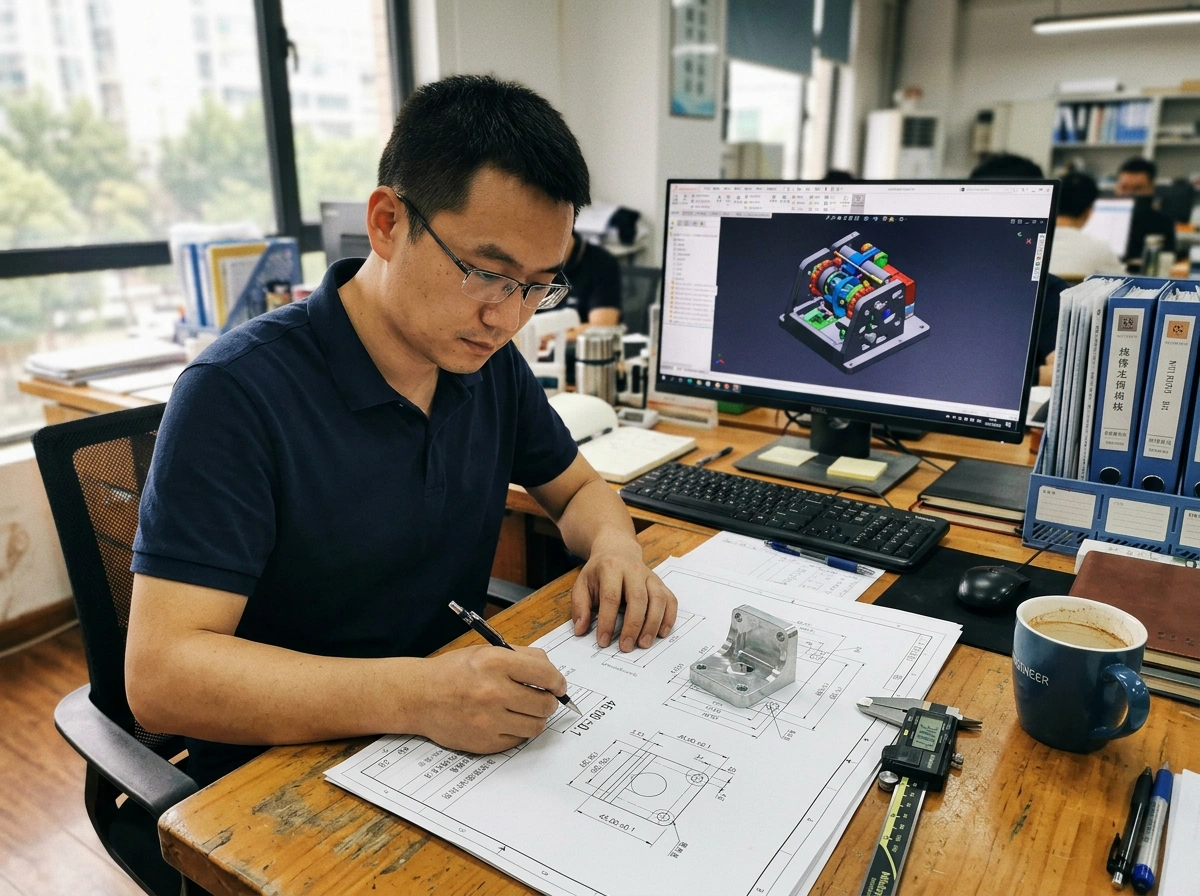
Useful programs start with a shared picture of critical features, assembly context, and inspection method—not only a part number. We use your RFQ to stress-test whether the model, PDF, and notes match how you intend to measure and accept the part. Ambiguous callouts are the ones that become rework, and they are easier to clarify on a screen before programming than they are to explain after a first article lands at receiving.
When your product mixes sheet metal, machined, and finished components, we care about how datums stack across operations so brackets, bores, and coatings do not fight each other at assembly. A bent sheet bracket that mates to a machined block has two datum stories that need to reconcile on the same drawing — not "figure it out in final assembly."
For U.S.-based engineering and procurement teams working across time zones, the goal is to keep questions on the right files and revisions before metal, plastic, or sheet stock is committed. One email thread per revision, one traveler per lot, one drawing everyone is reading — that is the structure that keeps the program moving on your schedule instead of ours.
Quotes and travelers tied to the revision you released
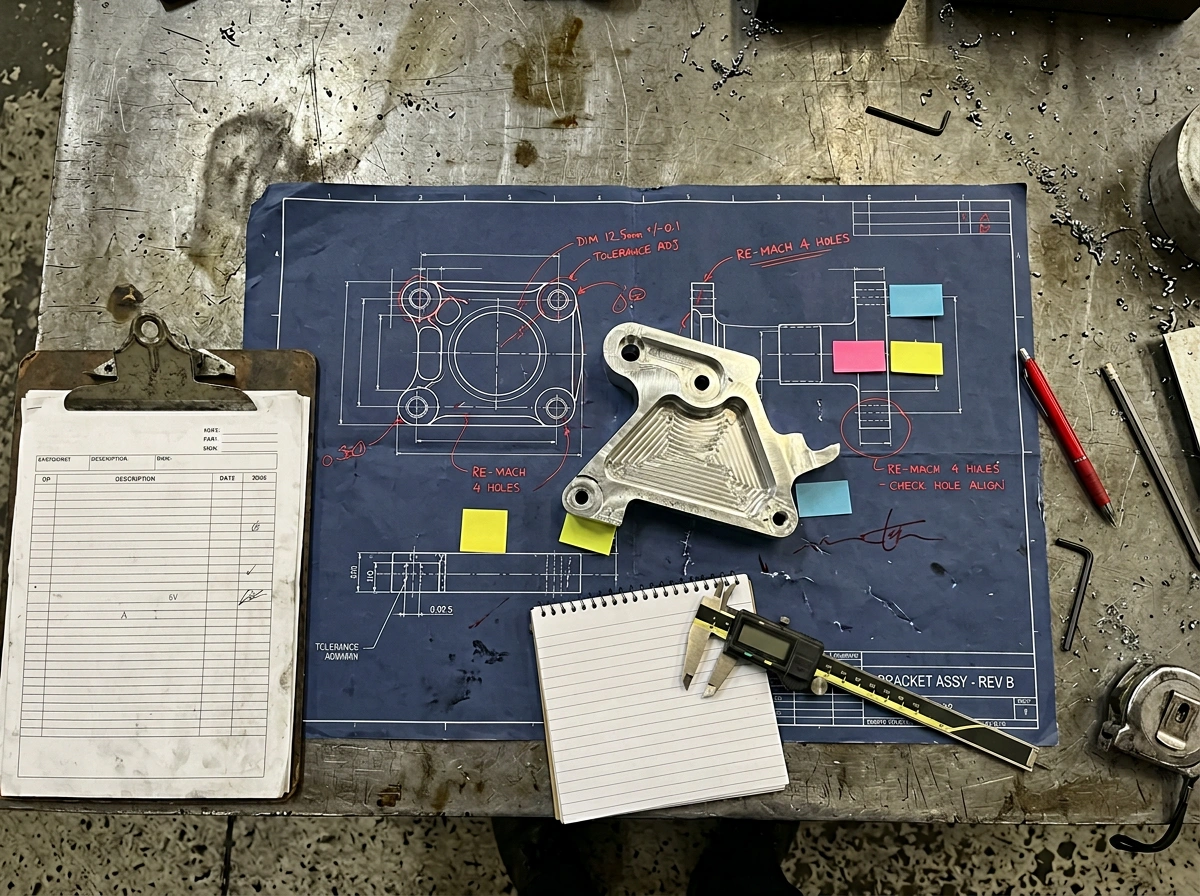
Every routing on our side starts from the revision you released, not from memory of a previous PO. Routings, secondary operations, and inspection assumptions are quoted as line items you can reconcile against your PO — so the traveler that reaches the shop floor carries the same scope the buyer agreed to. When a drawing revision lands, we re-confirm what moved: dimensions, datums, finish scope, or inspection intent. The traveler and inspection plan follow the change; they do not drift from it.
Inspection and sampling are discussed against the features you mark, not a generic certificate that ignores your part. Critical dimensions, fits, and surfaces drive the sampling plan and the fixturing strategy, so the first article report answers the questions a receiving inspector will actually ask. For recurring programs, the same discipline extends to repeat releases — revision control and escalation paths matter as much as the first article.
We do not claim certifications, customer names, or performance statistics on this site unless they are approved for publication on this domain. What ships with your parts is what your procurement process requires us to document — specific certifications, facility details, and program-specific quality clauses are confirmed when your program needs them on paper.
What we look for in your RFQ package
You do not need a perfect package on day one—you need a complete one relative to the revision you want quoted. These are the items that most often reduce back-and-forth.
CAD + 2D together
3D model (STEP/IGES or equivalent) plus a 2D PDF with tolerances, threads, finishes, and revision block aligned to the same release.
Critical features
Which dimensions, fits, or surfaces drive function or inspection—so sampling and fixturing can match your risk, not a generic default.
Quantity & schedule intent
Prototype vs pilot vs production, and any hard gates (samples, FA, PPAP-style milestones) stated up front so the quote reflects reality.
Our values
How we behave when the drawing is ambiguous and the schedule is tight—because that is when process matters most.
Clarity
Plain-language alignment between your drawing, the quote, and the traveler—so “critical” means the same thing on both sides.
Quality intent
Inspection and sampling plans discussed against the features you mark—not a generic certificate that ignores your part.
Partnership
We treat recurring programs as systems: revision control, repeatability, and escalation paths matter as much as the first article.
Integrity
We do not claim certifications, customer names, or performance statistics here unless they are approved for publication on this domain.
Next step
Discuss your next release
Share CAD, drawings, and schedule context. We will respond with questions and routing assumptions tied to your revision.