
Precision CNC Turning for Shafts, Sleeves & Threaded Parts
Most rotational work fails in communication, not on the toolpath: diameter chains, thread class, and which face is length zero have to match your PDF before the bar is loaded. We quote turning jobs with those details explicit—so gage strategy and traveler steps line up with what your receiving inspection expects.
At a glance
- Bar-fed, chuck, or casting starts—stock strategy named in the RFQ, not left implicit.
- Threads, bores, and runout callouts tied to inspection intent (not a generic “lathe tolerance”).
- When you need flats or cross-holes, the quote states lathe-first vs mill-first so sequencing is clear.
The spindle is your first datum—then everything else stacks
On a lathe, small mistakes in length zero, shoulder position, or thread gage direction propagate straight into assembly. That is why we treat turning RFQs like a datum review: we read how you chained diameters, where runout is referenced, and whether a bore is coaxial with an OD for a seal or bearing.
China Precision CNC matches stock form (bar, blank, or casting) and workholding risk to the section thickness and L/D you drew. If you need a flat, cross-hole, or pocket, we say so in the quote—live tooling, second operation, or hand-off to milling—with datums between steps spelled out.
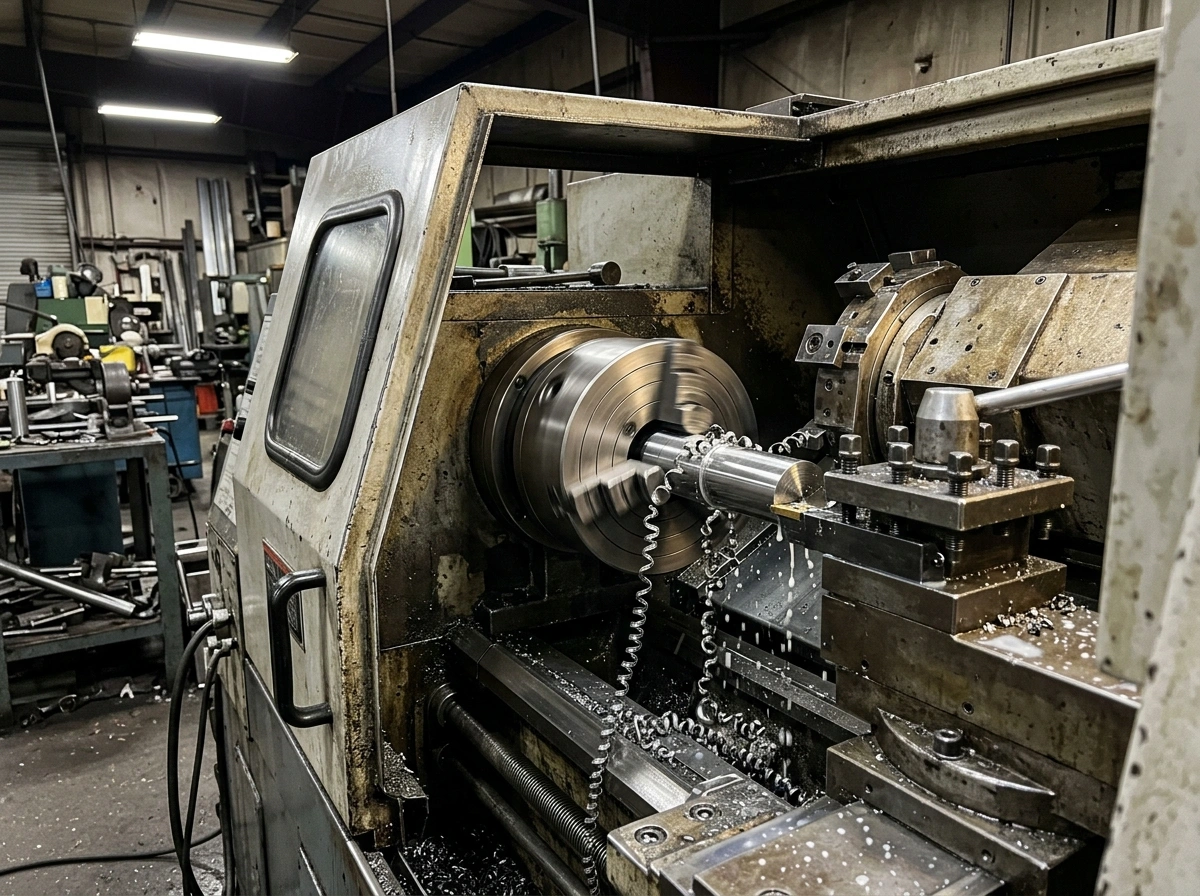
Lathe-side operations we quote against
We put capabilities before theory: these are the families that show up as line items. Your released traveler still names the exact sequence, tools, and hold points for the revision we quoted.
Straight OD / rough–finish
Diameter control along the spindle for running fits and bearing surfaces—often staged roughing then finishing to protect size and surface where the drawing is tight.
Tapers & angled shoulders
Conical fits and blended transitions where angle, length, and mate contact are defined—not left to “eyeball” comp.
Threading
Internal and external threads with gage rules that match your class, pitch, and length of engagement callouts.
Facing & shoulders
Square faces and step shoulders for length stack-up, perpendicularity to the axis, and clean surfaces before plating or assembly.
Drilling & boring
Coaxial holes and bores where depth, size, and runout relative to the OD are the risk drivers on the print.
Grooving & parting
Retaining grooves, snap-ring seats, and cut-off from bar—chip evacuation and rigidity matched to section thickness.
Planning bounds—what we discuss per job
This table sits between “what we can do on a lathe” and “how we write it down.” No shop publishes one universal max length—overhang, diameter, and material move together. Use it as a planning guide; the quote confirms limits.
| Feature | Typical notes (CNC turning) |
|---|---|
| Axes / tooling | 2-axis through live-tooling / sub-spindle paths as required by geometry and quote |
| Length & diameter | Discussed per job—stock form, overhang, and rigidity drive machine and workholding choice |
| Tolerances | Drawing-driven; length, diameter, and thread fit per your PDF (material- and size-dependent) |
| Lead time | Quoted per BOM, complexity, and queue—prototype vs production schedules differ |
| Related | Broader machining scope: CNC machining; prismatic work: CNC milling |
How those families show up on a traveler
You have seen the operation cards and the planning bounds we use in RFQs. This section is the bridge to paperwork: turning is rotational subtractive work—the part spins; the tool shapes OD, face, bore, groove, and thread features. “2-axis” vs “live tool” is whether geometry stays on one spindle setup or needs another axis for a hole, flat, or contour without a second fixture.
We still group work into families when we quote—so you can see what is straight OD work, what is thread-gated, and what implies a sub-op:
- Straight OD / rough-finish passes — journals, shanks, and seal diameters where diameter-to-diameter relationships drive the sequence.
- Tapers & blended shoulders — angles, Morse-style fits, or blended radii where compound motion or careful touch-off matters.
- Threading — single-point or form threading with gage rules that match your class and length of engagement notes.
- Facing & undercuts — square shoulders, relief grooves, and face-to-length control for stack-up with mating parts.
- On-axis drilling & boring — depth, size, and position relative to the spindle; ream vs finish bore when the drawing says so.
- Grooving & parting — snap rings, cut-off, and chip control on thin sections.
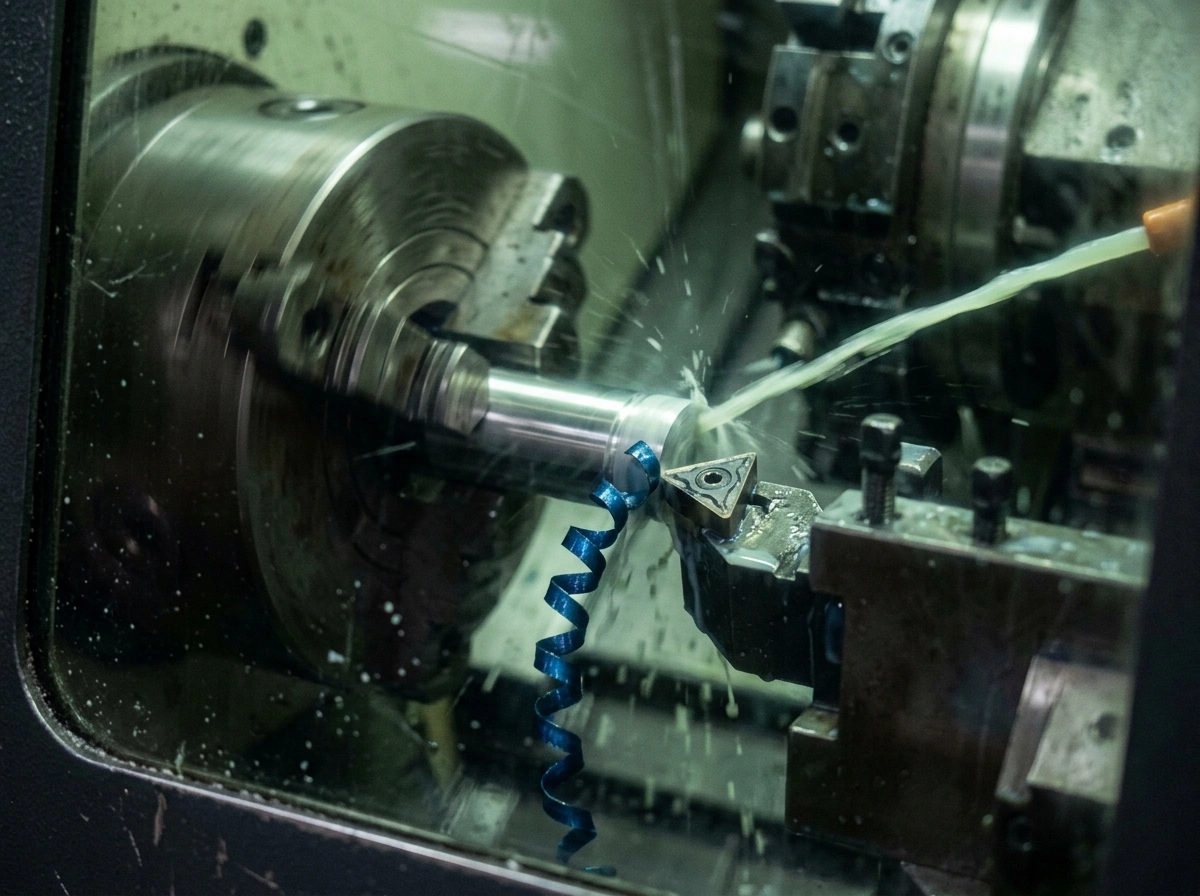
Chip shape, heat, and post-turn finishing
Turning behavior changes sharply with alloy, free-machining additives, and heat-treat state—same nominal grade can mean different tool pressure and spring. We confirm grade and stock form (bar vs casting) in the RFQ so the approach matches what you actually buy, not a generic “material” line.
Finishes after turning—passivate, plate, anodize, coat, and more—are scheduled so masking, edge breaks, and distortion risk match your PO. See surface finishing; for alloy families, start from the homepage materials overview.

Execution milestones (after stock & scope are locked)
You already saw planning bounds earlier—this section is the time-ordered path from package release to dock. On a lathe, when you face, rough, thread, and part matters for size and surface; the cards below are milestones, not a generic checklist.
Package review
We align CAD and PDF: length zero, thread tables, runout symbols, and any notes that override default shop practice.
Stock & workholding
Bar size, chuck strategy, or soft-jaw plan matched to the section you need to hold—especially on slender or interrupted cuts.
Program & first article
Tool list, offsets, and first-piece intent documented for the agreed machine class and revision.
Turning & in-process checks
Critical diameters, lengths, and threads checked where the drawing says risk lives—not a blanket “measure everything” sheet.
Final inspection
Thread gages, runout, and key lengths against the PDF; FAIs or reports aligned to your PO when required.
Finish & ship
Coatings and treatments in the order that protects dimensions; pack and label for your receiving dock.
What buyers gain when turning work is quoted as engineering work
Turning is not “easier than milling”—it is less forgiving of vague prints. These are the levers we pull so your receiving inspection matches what you approved.
Datum & length-zero clarity
We surface where length is measured from, how shoulders stack, and which face is the assembly reference—before offsets are locked.
Thread & runout on the traveler
Gage type, direction, and runout callouts are tied to inspection—not left for “check threads in QC.”
Named stock & hold strategy
Bar vs blank vs casting, and how we hold slender sections—so deflection and chatter risk are owned in the quote.
Clear multi-op routing
When you need a flat, hole, or pocket after turning, the sequence and datums between ops are explicit.
Finish order that protects size
Plating, coating, and passivation sequenced so heat and masking do not fight critical fits you already proved on the lathe.
Turning RFQs — common questions
Turning RFQ
Send the drawing—get a spindle-aware quote
Include your 2D PDF with threads, runout, and length datums. We return assumptions you can review with your team before you cut a PO.