Rapid Prototyping for OEM Parts
Move from CAD to touchable parts without skipping drawing discipline: machined, additive, and thermoformed routes are quoted against your 2D PDF and 3D model so material, tolerance, and inspection intent stay aligned before you commit to tooling-scale spend.
At a glance
- Validation builds for fit, assembly, and stakeholder review—not generic “fast parts” without scope.
- Method selection tied to geometry, material, and what you need to learn from the build.
- A bridge into CNC machining and surface finishing when you are ready to harden the program.
Why rapid prototyping belongs in a precision program
Prototypes exist to reduce uncertainty: assembly interference, ergonomics, thermal or fluid paths, and how your supply chain will receive parts. The useful prototype is the one whose scope matches the question—sometimes a single machined article, sometimes a printed geometry study, sometimes a formed enclosure shell.
China Precision CNC treats prototyping as engineering-led work: the same drawing references and revision discipline you expect on production releases, scaled to the risk you are managing on this iteration.
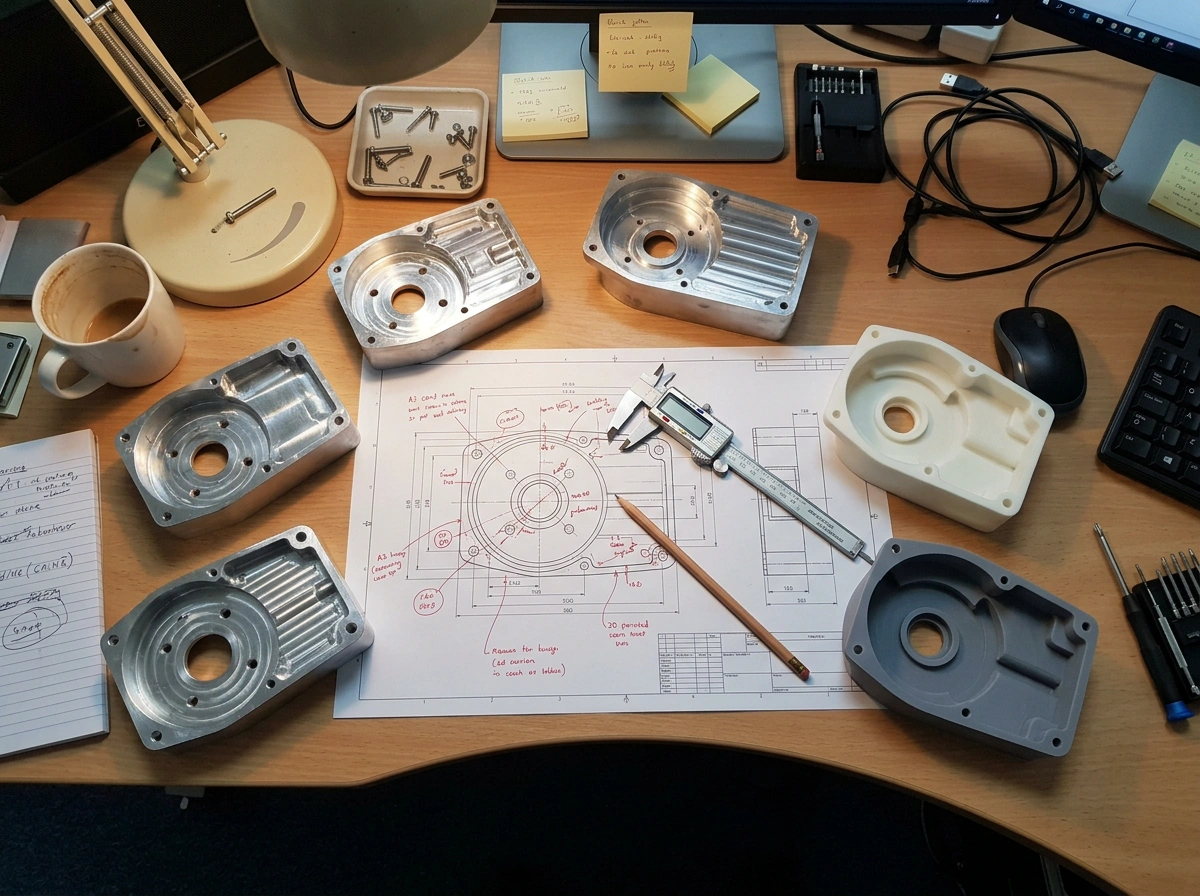
Machined, additive, or formed—pick the lane that answers your question
CNC machined prototypes test material behavior, threads, press fits, and tolerances you intend to carry into production routing. They align naturally with our milling and turning capabilities when the goal is process continuity.
Additive prototyping (3D printing) is strong for complex internal features, light weighting studies, and quick geometry iterations where subtractive access would multiply setups—quoted with realistic layer effects and post-processing in mind.
Thermoforming and sheet-plastic forming suit larger thin-wall parts—trays, covers, liners—where mold cost should stay proportional to the learning phase. Tooling assumptions are spelled out in the quote.
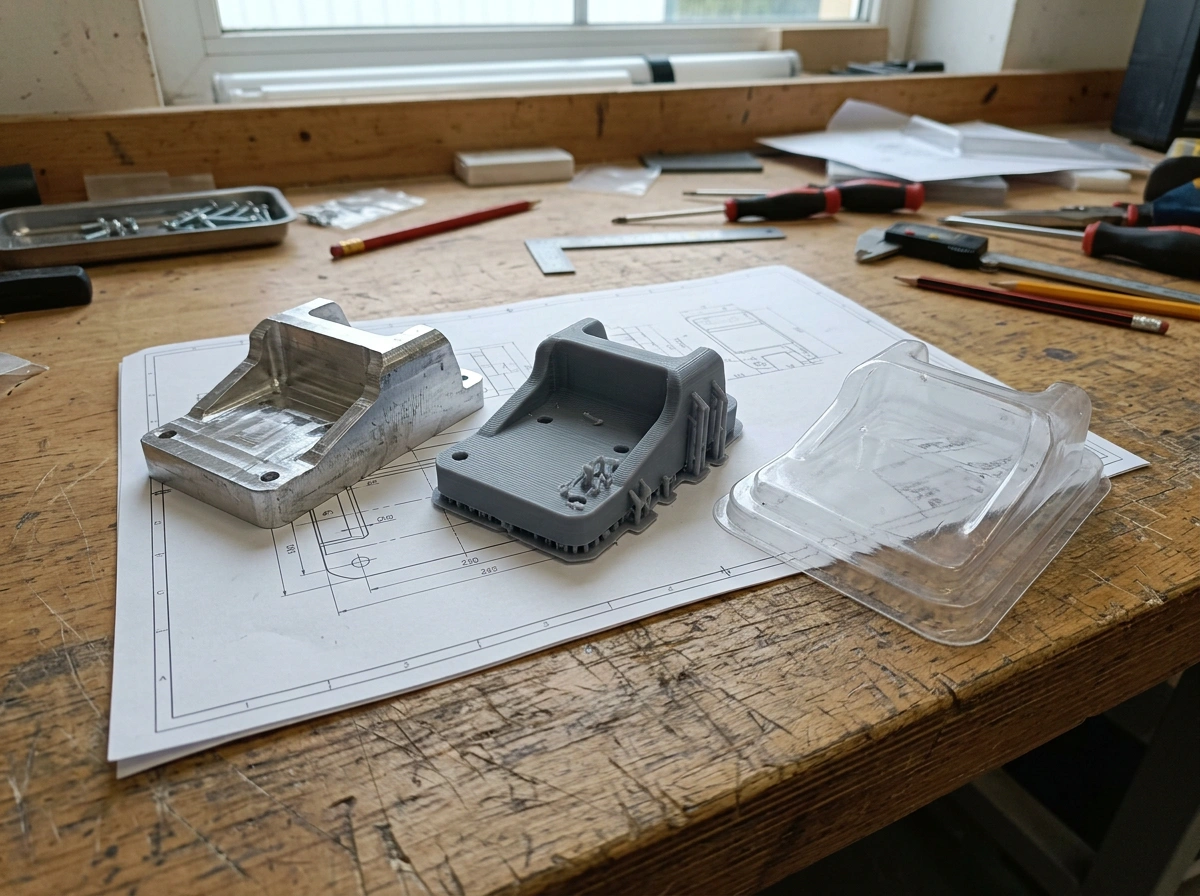
Three lanes we quote against your files
Same RFQ discipline as production: your 2D drawing carries tolerances and finish intent; the quote states method, material assumptions, and what will be measured.
Machined prototypes
Subtractive parts from bar, plate, or near-net stock—ideal when you need production-like surfaces, threads, and datums for test rigs or customer samples.
Additive builds
Layered prototypes for organic geometry, internal channels, and fast iteration; post-processing and anisotropy are part of the conversation—not afterthoughts.
Formed plastics
Thermoformed or sheet-based parts for large lightweight shells—useful when envelope and draft matter more than machining every detail on iteration one.
Prototype RFQ snapshot
Use this as a planning checklist. Final tolerances, materials, and lead times are quote-dependent—share the fields below so scope stays aligned.
| Topic | What to clarify in your RFQ |
|---|---|
| Files | 3D model (STEP/IGES preferred) plus 2D PDF; note revision and any customer or industry quality clauses that apply. |
| Purpose | Fit check, thermal test, sales sample, regulatory dossier support—each drives method, material certificate needs, and inspection depth. |
| Quantity | Single article vs small lot; repeat builds may justify soft tooling or alternate routing—stated explicitly in the quote. |
| Mechanical risk | Threads, press fits, sealing surfaces, and load paths—call out what must match production intent vs what is exploratory. |
| Finish & cosmetics | Cosmetic vs functional finish; link to surface finishing when coatings or treatments are in scope. |
| Schedule | Target dates are quoted against queue and method; expedite options are discussed when both sides agree on trade-offs. |
From prototype learning to production releases
The goal of a prototype program is not to win a speed headline—it is to lock what you learned into drawings, routings, and inspection plans that survive your next PO. When you are ready, we align machined prototypes with the same datum and tolerance story you will use on production lots.
Finishes and coatings can stay on the critical path: coordinate cosmetic and functional treatments early so rework does not erase schedule gains—see surface finishing for how we quote coatings as controlled line items.
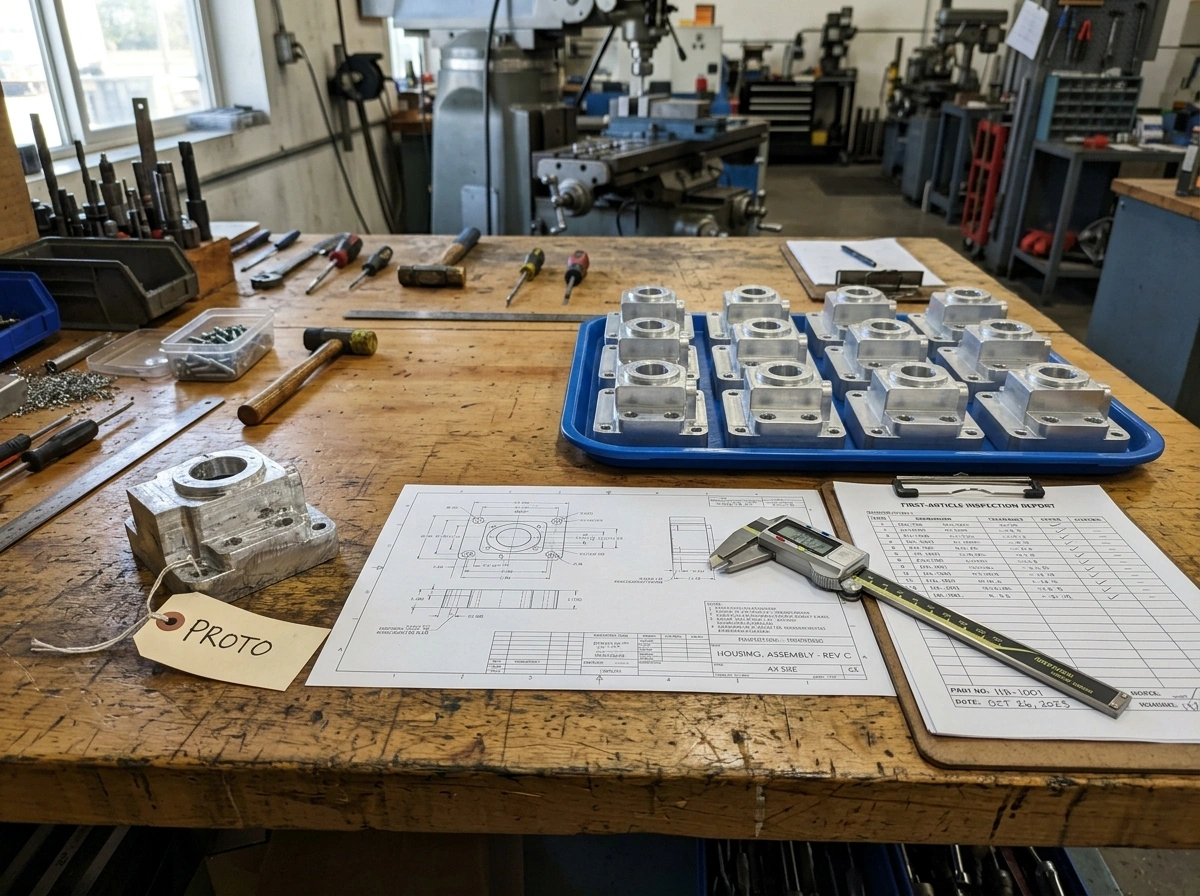
How a prototype RFQ moves
A straightforward sequence—your actual milestones and documentation are spelled out in the quote.
Files in
You send CAD, drawing, and context (quantity, purpose, critical features). We confirm formats and flag missing tolerance or finish data before pricing.
Scope aligned
Manufacturability and method choices are discussed while changes are still cheap—material, process, and inspection assumptions match what you approved.
Deliver & document
Parts release with dimensional and visual checks tied to the quote; you receive what you need for internal sign-off and revision control.
Why teams prototype with China Precision CNC
Method diversity matters, but so does communication—especially when the prototype has to inform a production award.
Routing honesty
We recommend the process that fits the question—not the one that happens to be idle. If machining is wrong for the iteration, we say so.
Bridge to CNC
When the program matures, the same drawing discipline feeds precision CNC machining and repeat releases without reinventing the data package.
Inspection that matches intent
Measurement plans follow what you need to learn this round—critical features first, not generic full-layout sweeps unless you ask for them.
Finish as a line item
Cosmetic and protective finishes are quoted explicitly—see surface finishing for coatings, anodizing, and controlled appearance.
Rapid prototyping FAQs
Prototype RFQ
Request a rapid prototyping quote
Send your CAD, drawing, and purpose for the build. We will respond with method options, explicit assumptions, and a schedule you can plan against.