
Sheet Metal Fabrication for Panels, Brackets & Enclosures
Sheet metal work is where flat pattern, bend sequence, and joining intent meet shop reality. China Precision CNC quotes fabrication with those inputs explicit—so springback, weld distortion, and finish scope do not show up as surprises after the first article.
At a glance
- Cutting and blanking paths discussed against gauge, edge condition, and feature pitch on your drawing.
- Press-brake style forming with bend radii and tool access aligned to the revision you release—not a generic “standard bend.”
- Joining and hardware called out as controlled line items (weld class, fastener, rivet, or adhesive) with inspection intent where you mark critical fit.
Flat pattern, bend lines, and what the quote must name
Useful sheet-metal RFQs pair 3D intent with 2D bend notes: which faces are cosmetic, which edges seal, and whether you expect a developed blank review before hard tooling assumptions lock in.
We align on material side (which surface is “up” in the brake), minimum flange for tooling, and hole-to-bend distances that affect punch or laser sequencing. If your assembly stacks machined blocks with bent sheet, say so—we can coordinate hand-offs with CNC machining when both appear on the same BOM.
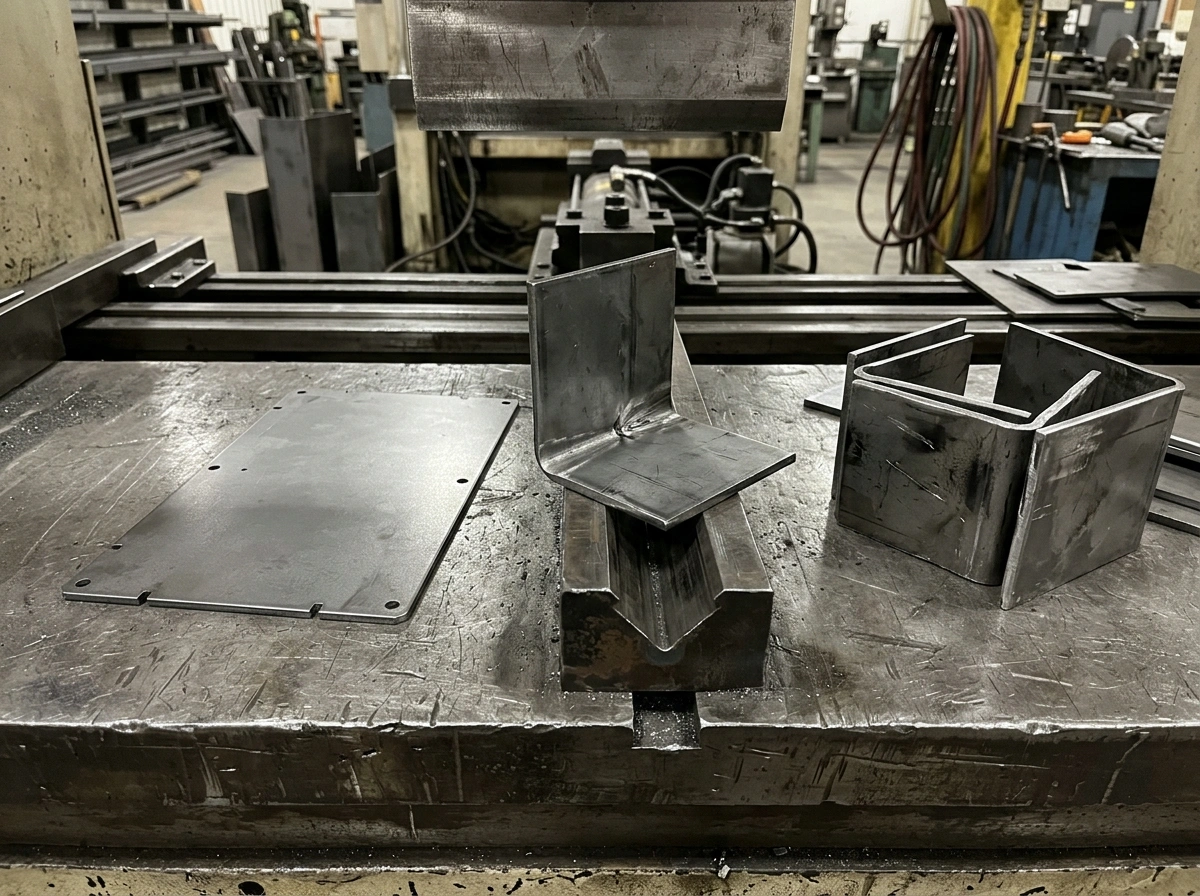
Gauge, grade, and finish stack on thin stock
Thickness drives stiffness, weld heat input, and how aggressively we can deburr without rounding critical edges. Grade (aluminum, steel, stainless, or coated stock) drives corrosion expectations and whether post-fabrication surface finishing is in scope.
We do not substitute sheet stock silently—alternate grades or pre-coated material are confirmed against your drawing and environmental notes before material is ordered.
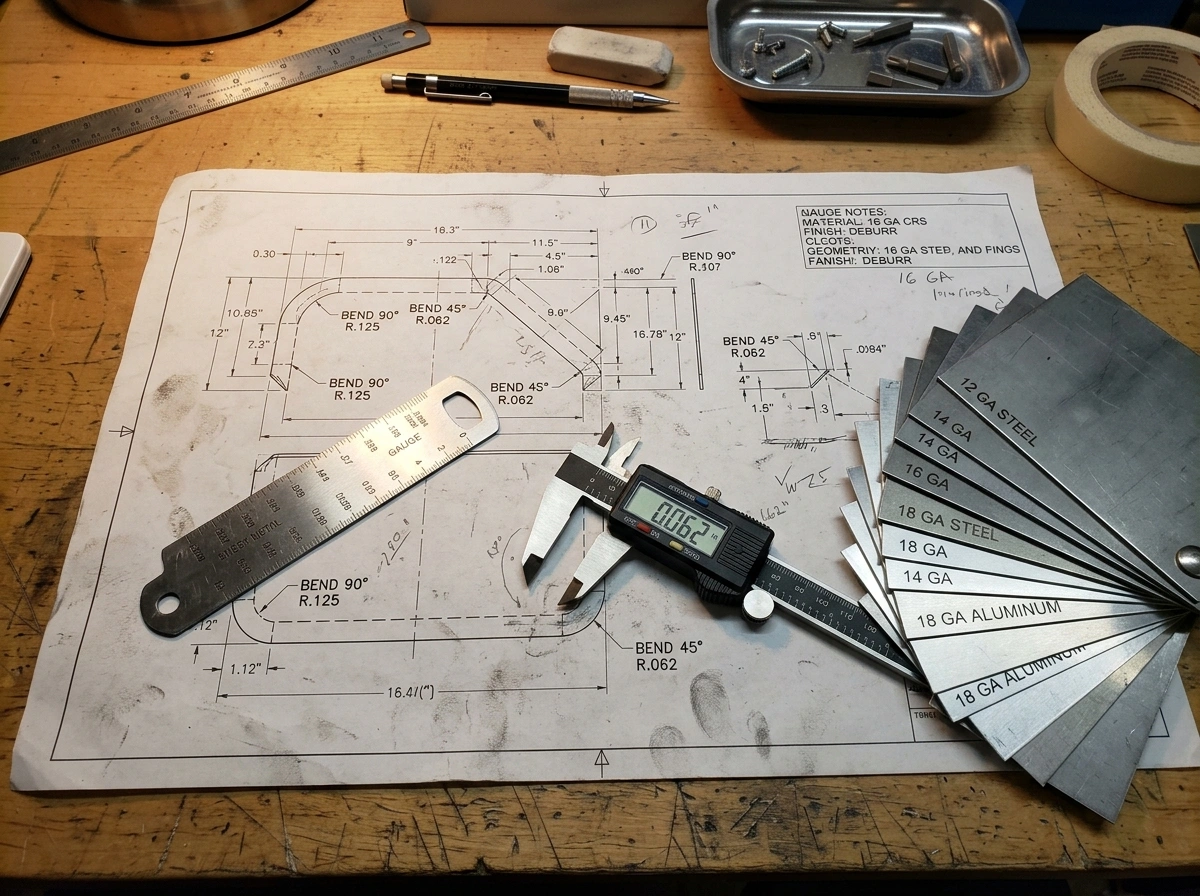
Three fabrication pillars—how work is grouped
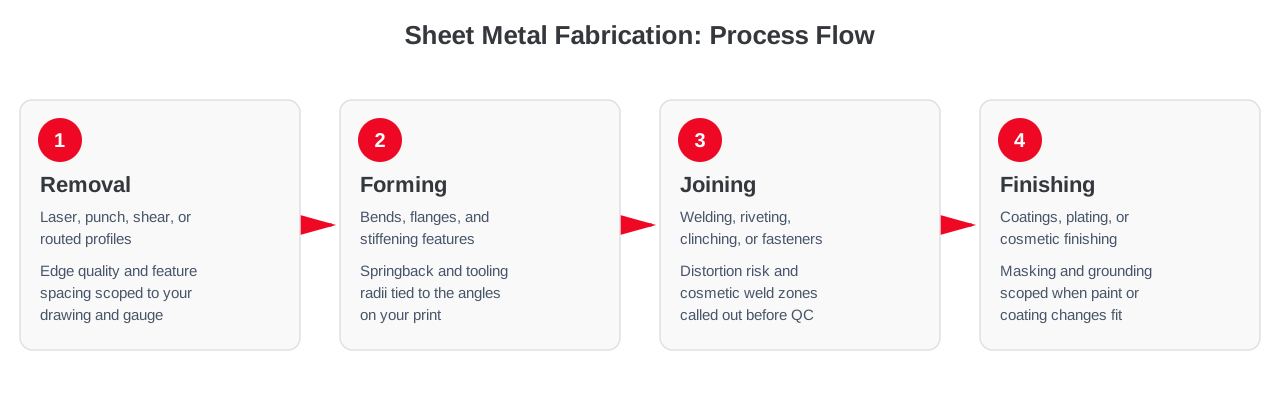
Most parts move through removal, forming, and joining in some order. Your traveler names the sequence; the quote names assumptions for each pillar so both sides agree before metal is committed.
Removal
Laser, punch, shear, or routed profiles—edge quality, heat-affected zones, and feature spacing discussed against gauge and tolerance bands you mark critical.
Forming
Bends, flanges, and stiffening features—springback, tooling radii, and gauge repeatability tied to the angles and lengths on your print.
Joining
Welding, riveting, clinching, or mechanical fasteners—distortion risk, cosmetic weld zones, and leak paths called out before inspection plans lock in.
How a sheet metal RFQ moves through the shop
The three fabrication pillars in sequence, plus where finishing enters the routing.
Sheet metal RFQ snapshot (planning view)
Align internal reviews—not a universal capability matrix. Thickness, geometry, and finish drive routing; your quote states what applies to this revision.
| Topic | Often discussed when… | Typical quote inputs |
|---|---|---|
| Blank & cut | Nested parts, tab-and-slot kits, or tight pitch between features. | Edge burr allowance, heat input sensitivity on coated stock, pierce sequence vs bend later. |
| Bends | Multi-bend brackets, enclosures, or cosmetic face alignment. | Inside radius, angle tolerance, bend relief, and which dimensions are measured in formed state. |
| Welds & assembly | Sealed boxes, frames, or mixed-thickness joints. | Weld symbol interpretation, cosmetic vs structural, hardware torque and sequence. |
| Finishing | Appearance, corrosion, or electrical continuity requirements. | Masking islands, grounding points, and touch-up scope after assembly. |
After fabrication: hardware, paint, and mixed routings
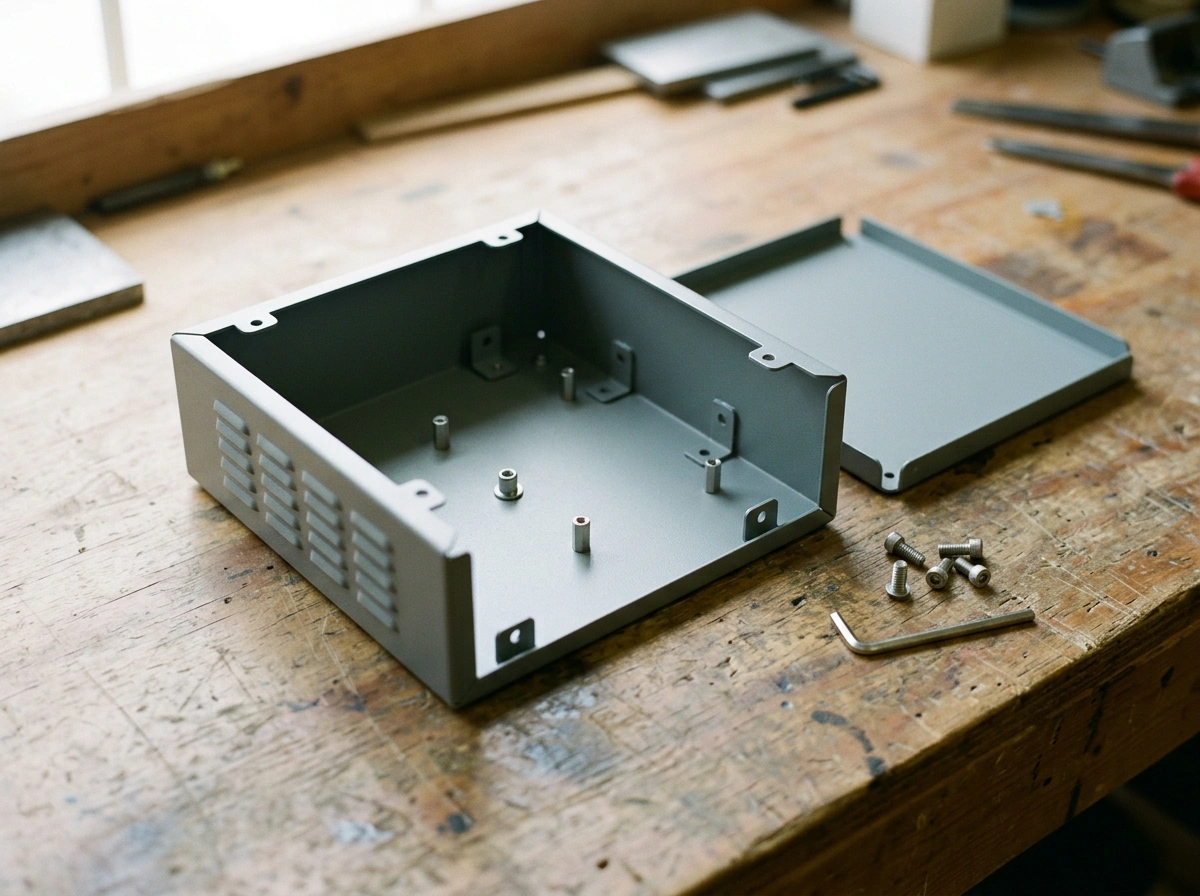
Installed hardware and press-fit inserts belong in the same conversation as hole tolerance and assembly order—especially when paint or powder coat thickness changes fit.
When your product mixes bent sheet with machined blocks or turned pins, we align datum hand-offs so bracket holes line up with the features you already released on the machined side of the BOM.
Sheet metal fabrication FAQs
Sheet metal RFQ
Quote your fabricated sheet metal parts
Send CAD, 2D drawing with bend and weld notes, material and gauge, and finish scope. We will respond with forming and joining assumptions tied to your revision.