
Coatings & Treatments After Machining
A finish changes dimensions, appearance, and corrosion life—often on features you already proved on CMM or thread gages. China Precision CNC quotes anodize, plate, blast, conversion coats, and mechanical finishes as controlled line items: same drawing revision as the metal, explicit mask zones, and inspection criteria you can align with receiving.
Buyer checklist
- Finish callout (or spec reference), cosmetic standard, and keep-off list—written, not implied from a photo.
- Whether finishing runs in our machining traveler or as a gated sub-release after dimensional approval—stated in the quote.
- Evidence you need at shipment: visual only, thickness spot checks, CoC, or lot trace—matched to your PO.
Where finishing sits in your release—not an off-site mystery step
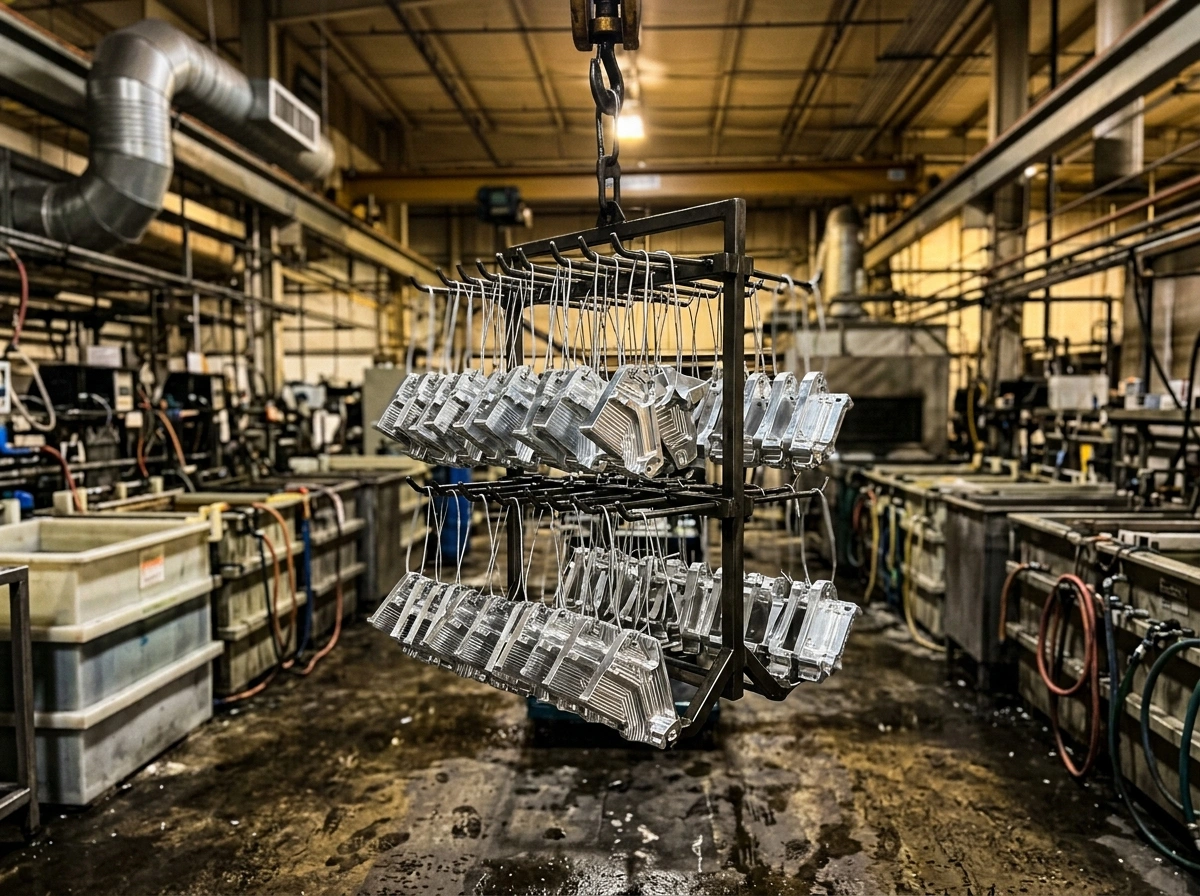
Buyers often ask “anodize black” before they have answered when the part is dimensionally frozen. We spell out whether finishing follows first-article approval, a production release, or a split PO for prototypes vs repeats—so queue time and rework risk are not confused with chemistry.
When machining and finishing are both with China Precision CNC, deburr, rack orientation, and what must stay pristine between ops live on one plan. If you only need finishing, send the same revision you gave the machine shop plus your finish notes so scope stays single-source.
Thickness, fit, and what “good” means after chemistry
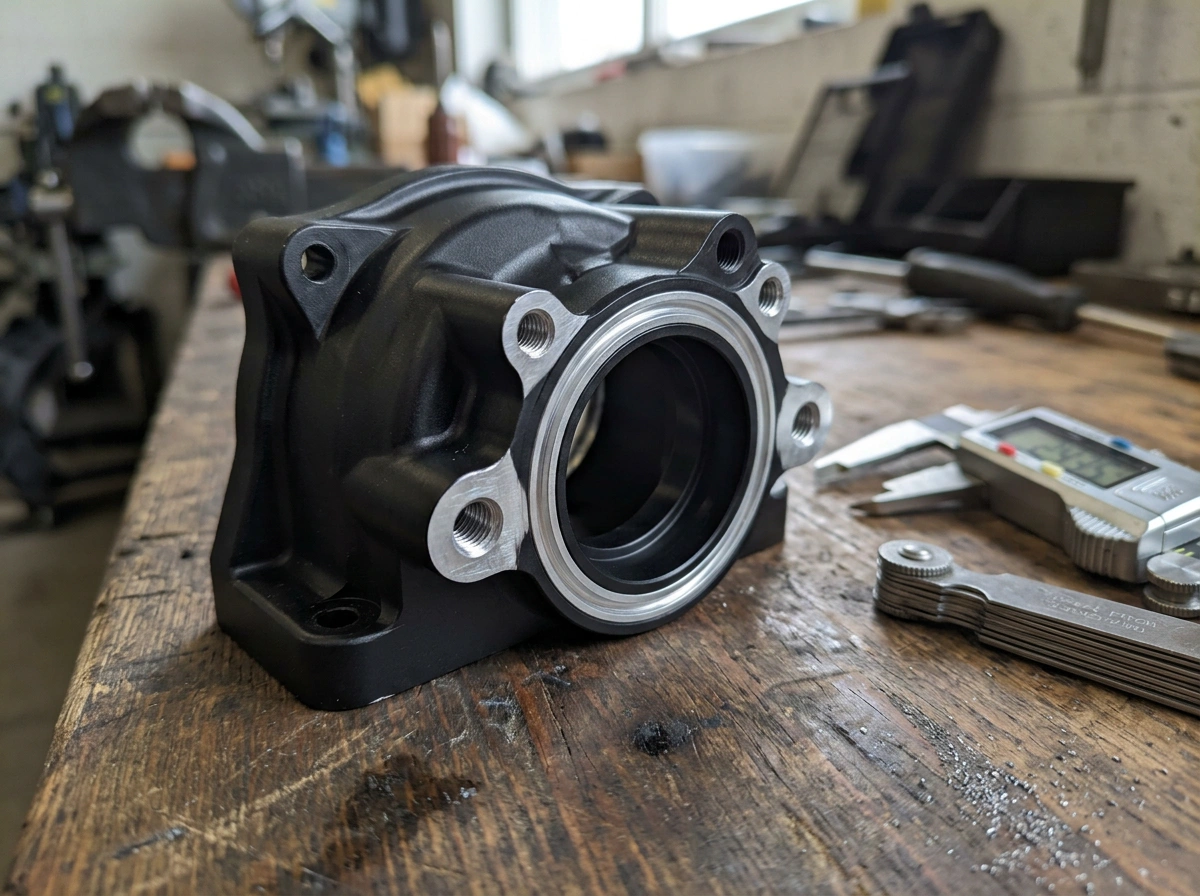
Electrolytic and conversion finishes add or remove stock at the surface. That matters for thread pitch diameter, press fits, and seal lands—not only for cosmetics. We align coating build to your tolerances: mask, pre-machine stock for coat, or post-coat verification—whichever the drawing can support.
Your traveler should say what gets gaged after coat (threads, bores, electrical pads) and what is visual-only. We refuse to hide “fit risk” in a blanket cosmetic note—because that is where assemblies stick at the customer dock.
RFQ fields we align before quoting chemistry
Finish catalogs come after schedule and fit context above. This table is the cross-check we use so two quotes on the same part number do not diverge—still quote-dependent, not a capability guarantee for every geometry.
| Topic | What we settle in the RFQ |
|---|---|
| Base material | Alloy, temper, prior heat treat—drives which finish families are realistic. |
| Critical surfaces | Threads, fits, seal bands, grounding pads—mask vs plate vs chase threads after coat. |
| Cosmetic rules | A-side definition, rack marks allowed, touch-up policy—tied to your standard if you have one. |
| Evidence | Thickness, adhesion, salt spray, or lot trace—only what your PO asks for. |
| Machining source | Often in-house: CNC machining, milling, turning—same revision handoff. |
Finish families on the line
Pick a bucket to describe your need; the quote locks vendor parameter band and sequence—not a generic “Type II” label without context.
Conversion & anodize
Aluminum anodizing (decorative or hard), chromate/alodine-style pretreatment where applicable—color, seal, and thickness intent from your print.
Electroplate & electroless
Nickel, zinc, decorative chrome stacks, EN for uniform coverage—hydrogen embrittlement notes on high-strength steels when applicable.
Passivation & film
Stainless passivation, conversion films for bond or corrosion prep—documentation per PO.
Blast & texture
Bead or media blast for matte cosmetic or mechanical prep—coverage and edge break per your notes.
Polish & buff
Directional or mirror cosmetic where Ra or reflectivity is specified—not open-ended “polish.”
Powder & wet coat
Powder and selected liquid systems—masking, hang points, and cure windows planned before parts enter the booth.
Keep-offs, edges, and electrical islands
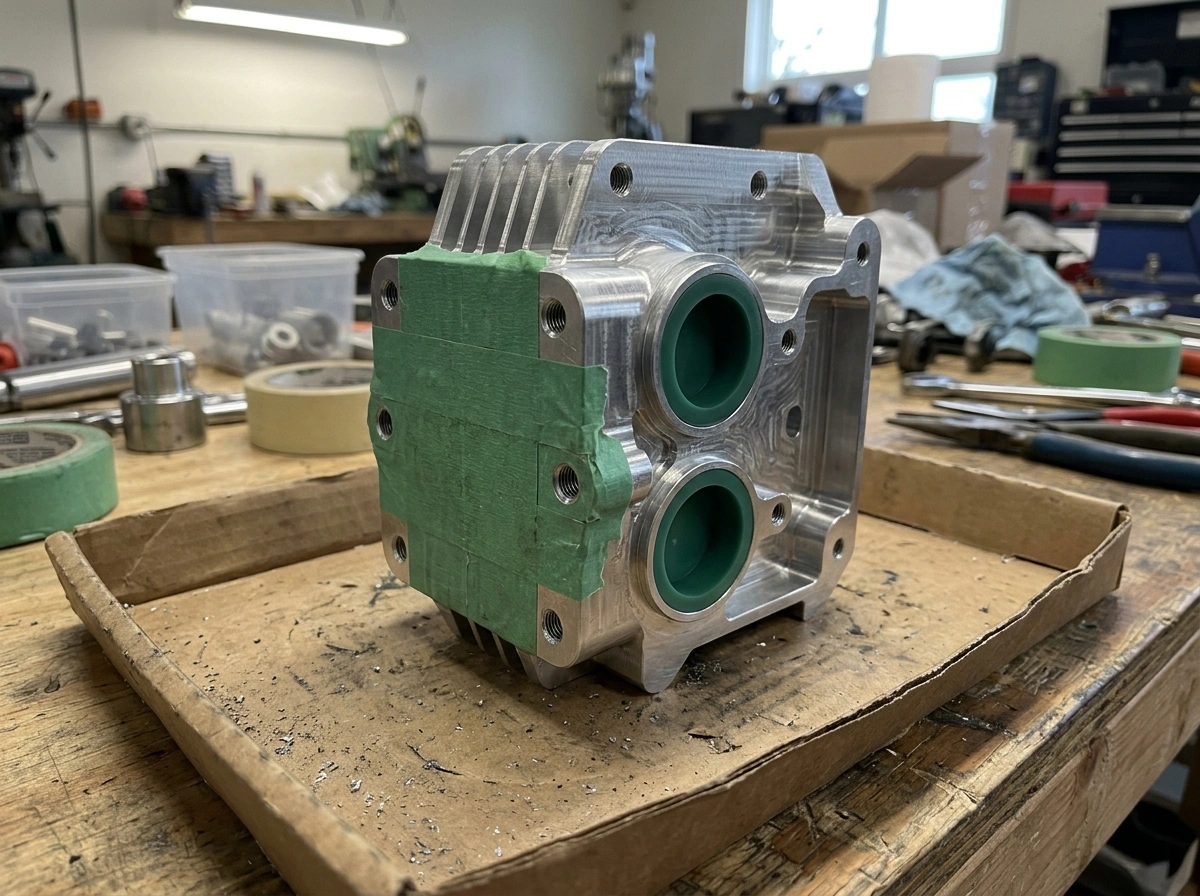
Masking is engineering: threads, ground studs, bearing bores, and RF or sense pads must be named. We document keep-off geometry against your PDF so production does not improvise tape lines.
Deburr and edge break before coat affect adhesion and corrosion. If one edge must stay sharp for assembly, it belongs in the notes—we match deburr and blast intensity to that conflict instead of defaulting shop-wide.
Locked scope, shown as four gates
Why buyers ask for locked scope: finishing is not a color chart—when the finish note or revision moves, masks, inspection, and packing move with it. China Precision CNC puts those assumptions in the quote so your quality plan and our traveler stay one story—whether the blank came from our milling and turning lines or from your incumbent shop.
A coating line is not six equal steps like a machining cycle—these are gates where outcome can still change. The strip stays short so it maps to traveler headers.
Spec gate
Finish callout, thickness band, color reference, and critical fits frozen to the same revision as the blank—conflicts resolved before pretreatment so “locked scope” is real, not a PDF footnote.
Pretreat & apply
Clean, etch or blast per process sheet, then coat or convert under controlled racks and orientation.
Verify & release
Visual per standard, targeted thickness or gage checks where your PO demands evidence—failures contained before pack.
Protect & document
Non-scratch pack, labels, CoC or lot links exactly as listed—no generic certificate boilerplate.
Finishing questions buyers actually ask
Finish package
Send revision, finish callout, and mask rules together
We will return line-item assumptions—thickness, keep-offs, and evidence—so you can drop them straight into your supplier audit.