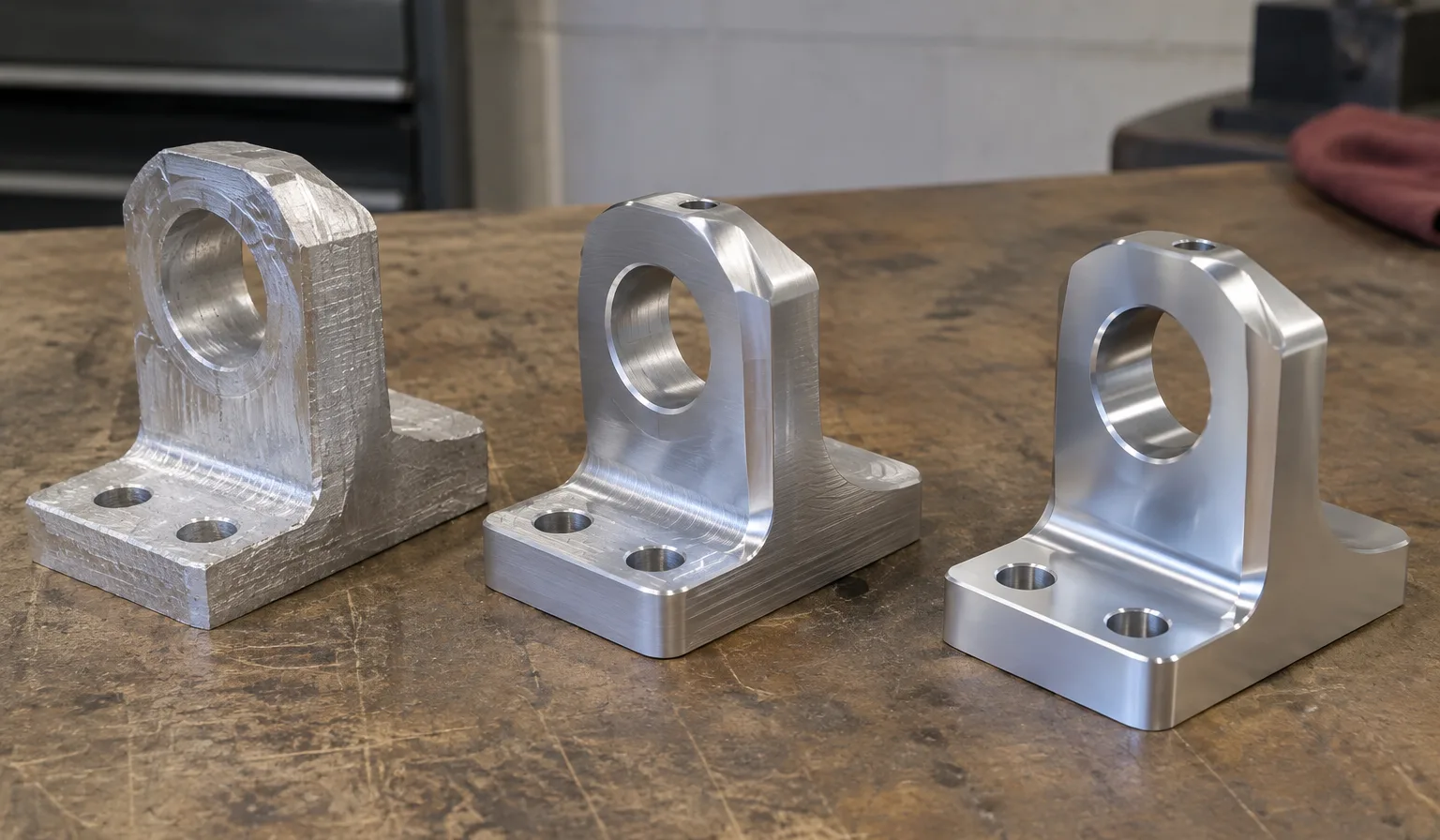
A CNC prototype and a production part can be the exact same drawing and still be two different sourcing decisions. What changes isn't the geometry — it's the volume, and volume is what decides whether staying on CNC still makes sense or whether it's time to move toward tooling. Getting that call right, and structuring the RFQ around it, is the difference between a smooth scale-up and a re-quote three months in.
Why Volume, Not Design Maturity, Drives the Decision
It's tempting to treat "the design is finalized" as the signal to move to production tooling. It isn't — a finalized design at 20 units a year and the same finalized design at 20,000 units a year point at completely different processes. Tooling carries a real up-front investment that only pays off spread across enough parts; at low volume, that investment doesn't amortize, and CNC — which needs no part-specific tooling at all — stays the cheaper per-part option even once the design is locked.
When CNC Still Wins — Low-to-Moderate Volume
CNC machining, unlike molded or die-cast processes, doesn't require a dedicated tool before the first part comes off the machine. That's exactly why it's the default for prototypes, but it doesn't stop being the right call the moment a design is validated — for genuinely low-volume production, ongoing spare-part runs, or programs where demand is still being proven, staying on CNC avoids committing tooling capital to a volume that hasn't materialized yet.
Best fit: validated designs at volumes too low to amortize a mold or die tool, or programs that need to keep flexibility on design changes a hard tool would lock in.
Bridge Production — The Deliberate Middle Stage
Bridge production means staying on a low-tooling process like CNC at moderate volume, either while a hard tool is being built or while the program's real demand is still being confirmed. It's not a compromise or a delay tactic — it's a deliberate way to keep shipping product without betting tooling capital on a volume number that isn't locked yet. A program can run bridge production for a defined window and move to hard tooling once volume and lead time both justify it, or it can stay there indefinitely if the volume never crosses that line.
Best fit: programs with real, current demand but no committed long-term volume number yet, or where hard-tool lead time doesn't match a launch date that can't slip.
When It's Time to Move to Hard Tooling
The economics flip once volume is high enough and stable enough that a mold or die's tooling cost, spread across the run, comes in below what CNC's per-part cost would be at that same volume — plus, injection-molded or die-cast parts pick up process characteristics (wall thickness behavior, cycle time, material flow) that a machined part doesn't replicate exactly, which matters once a part is being engineered specifically for high-volume production rather than adapted from a machined prototype. Making that switch works best when the design has been stable through at least one production-representative validation run, not straight off the first prototype iteration.
Best fit: confirmed, stable volume high enough to amortize tooling cost, where the part's long-term design is locked and validated in production-representative material.
Structuring the RFQ for a Scale-Up
The mistake that causes a re-quote mid-program is sending an RFQ that only describes the part, not the volume trajectory. State the current volume, the volume you're planning toward, and the timeline between them — that's what lets a shop quote CNC for now with an honest read on whether bridge production or tooling is the right next step, instead of quoting today's volume in isolation and re-negotiating everything when the real number shows up.
What This Means for Your Next Quote
Tell us where the part is now — prototype, bridge, or committed production volume — and where it's headed, and the quote reflects the actual decision in front of you instead of assuming every part is either a one-off or already tooled. Plan your production ramp with us by sending the drawing along with your volume trajectory. See our rapid prototyping and CNC machining pages, or contact us with your drawing.