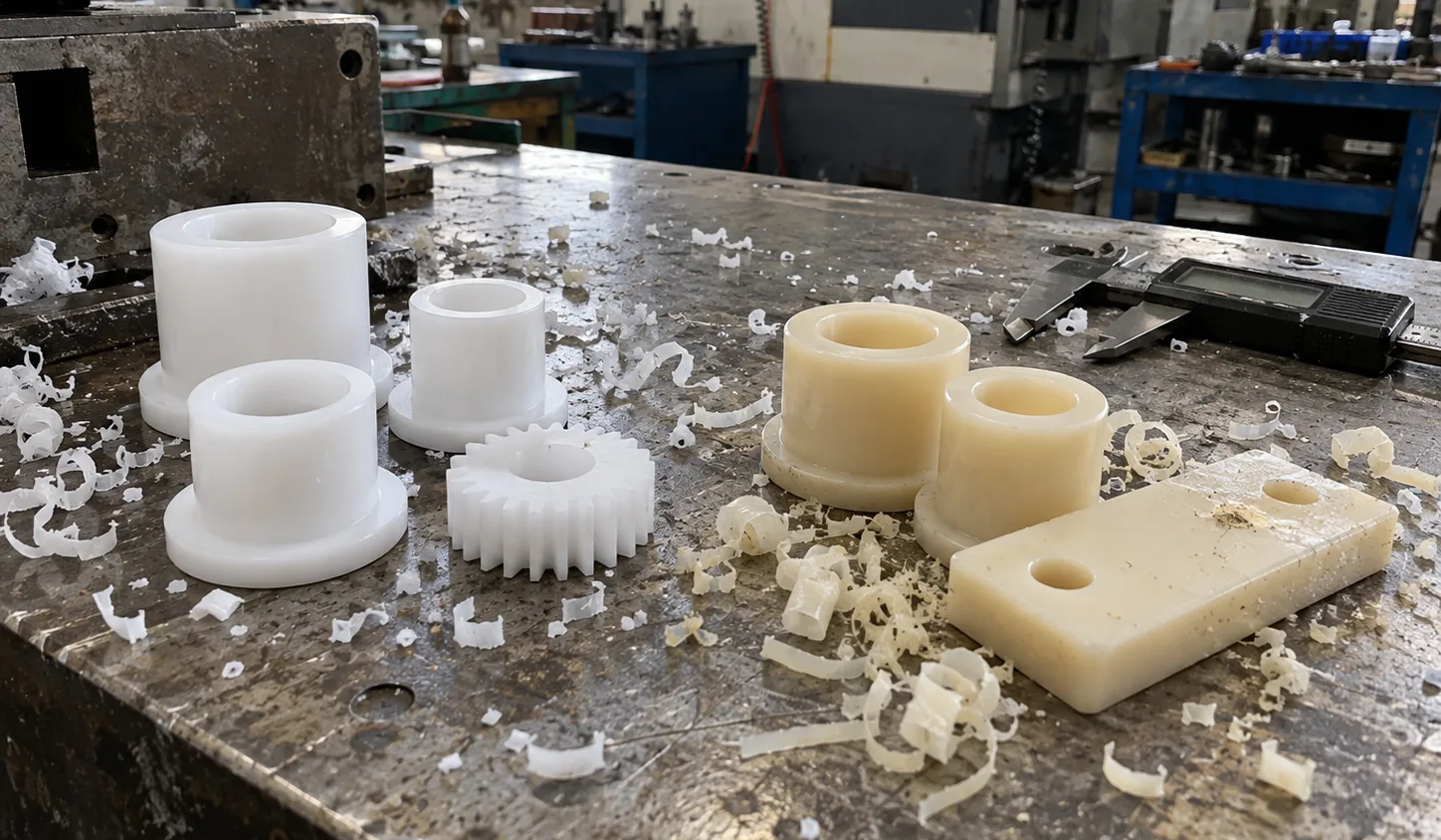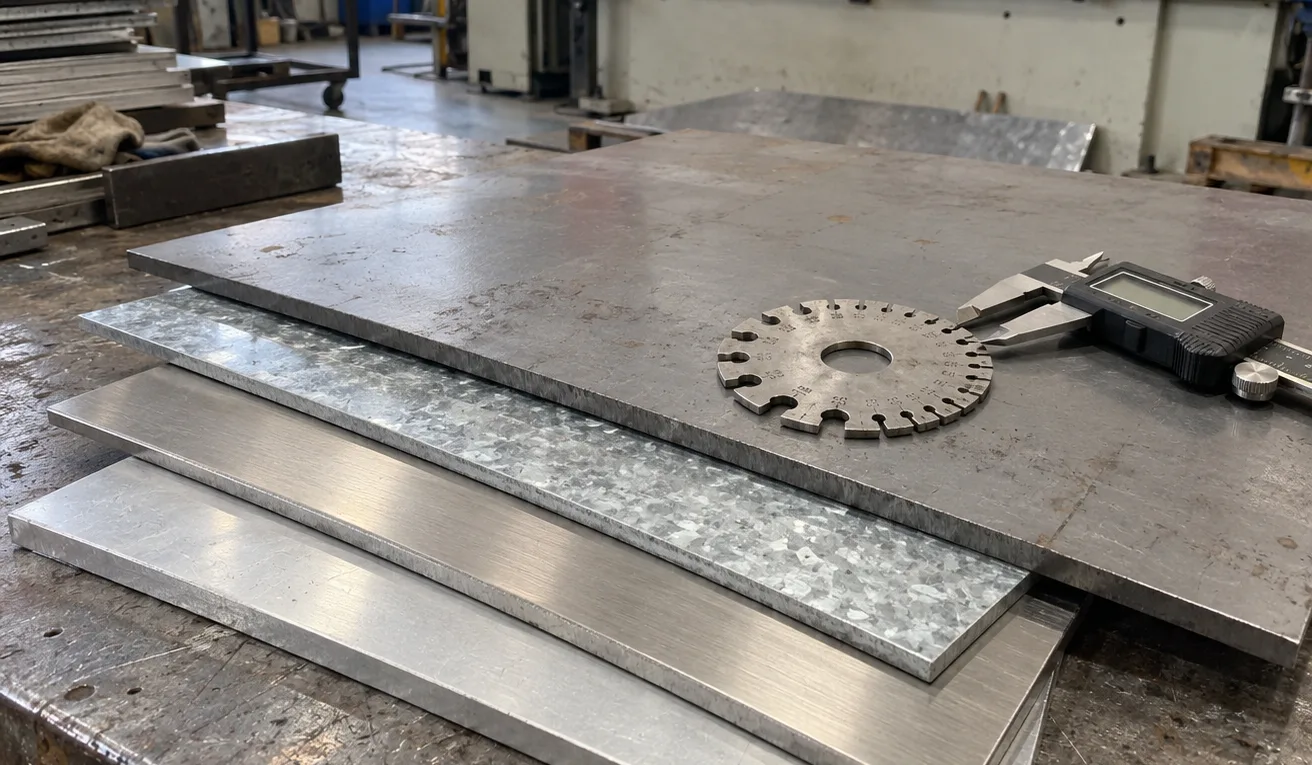
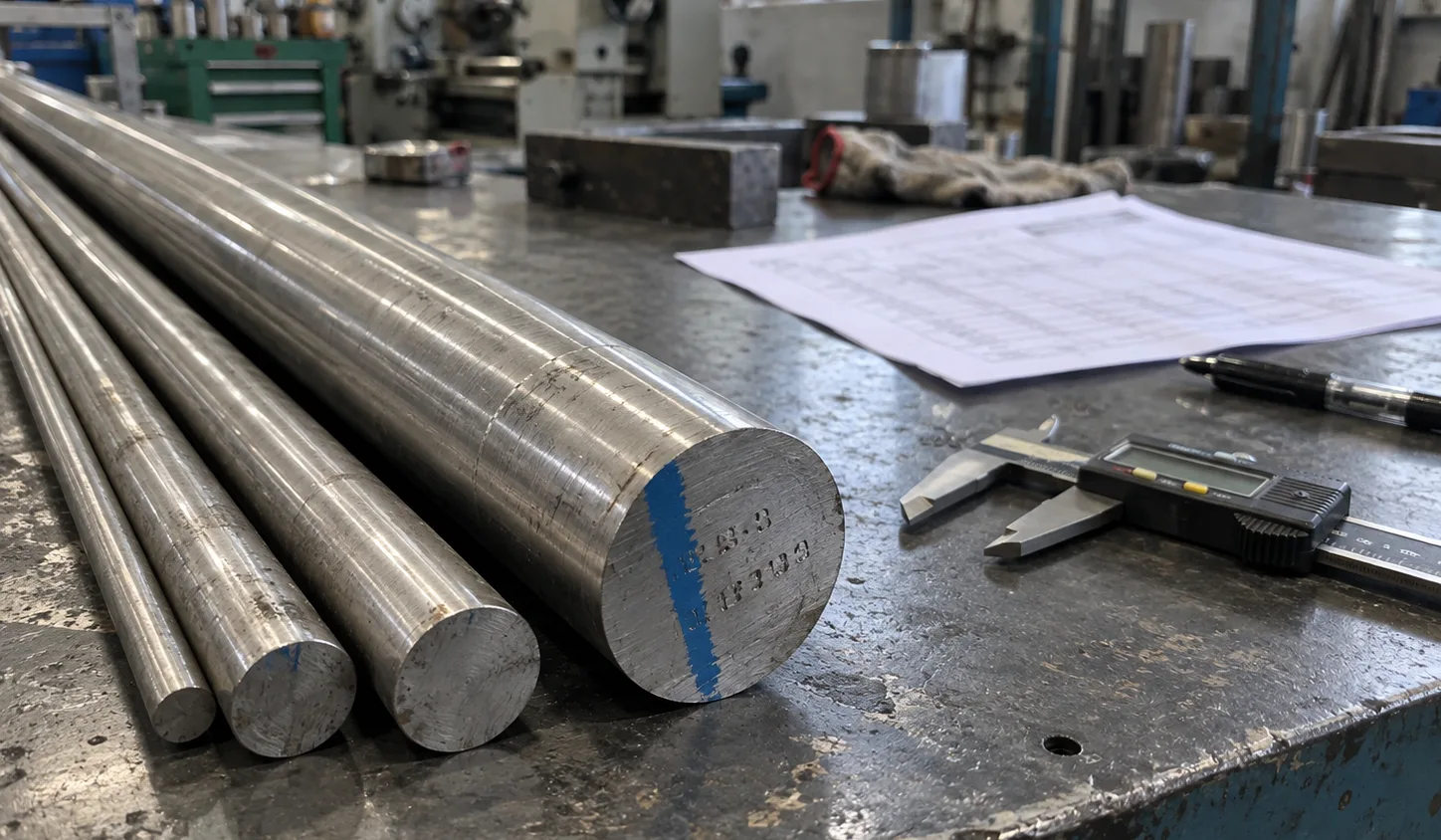
A mill test report (MTR) is the document a metal producer issues to show that a specific batch of material, identified by its heat number, meets the chemical and mechanical requirements of the standard it was ordered to. For a buyer sourcing machined or fabricated parts from China, the MTR is the only paper link between the drawing's material callout and the bar or sheet the parts were actually cut from. This guide covers what an MTR contains, how the EN 10204 certificate types differ, and how to check one before you accept parts. If you are still writing the drawing, our metal CNC machining materials page covers how to call out the grade itself.
The short answer: decide which document you need (usually a test report or an inspection certificate under EN 10204), write it into the RFQ, and on delivery check three things in order: the grade and standard match the drawing, the heat number on the certificate matches the heat number traced to your parts, and every reported value sits inside the limits of the standard named on the certificate.
What Is a Mill Test Report (MTR)?
An MTR, also called a mill certificate, mill test certificate or material test report, is issued by the mill or by a stockholder passing the mill's data along. It ties one cast of metal, called a heat or melt, to the test results taken from that cast. Each cast has its own chemistry, so the certificate is only valid for material that can be traced back to that heat.
The European stainless steel delivery standard EN 10088-2 is a good example of how this works in practice. It states that the type of inspection document is agreed for each delivery at the time of ordering. It then specifies what the document must contain: cast analysis results for a test report, plus the results of mandatory tests when an inspection certificate is agreed. In other words, the MTR is not an optional extra the mill adds at the end. It is part of the purchase contract for the material.
Is an MTR the same as a certificate of conformance?
No. A certificate of conformance (CoC) is a statement that the material or part meets the purchase order. It may or may not include test data. An MTR reports measured chemistry and mechanical properties for a named heat. A CoC from a machine shop that says "material per drawing" with no attached mill data tells you much less than an MTR does.
What Information Is on a Mill Test Report?
Layouts vary from mill to mill, but a usable MTR always carries the same core blocks. The table below lists them and what each one lets you check.
| Field on the MTR | What it tells you | What to check against |
|---|---|---|
| Issuer and certificate number | Who produced the document and its unique reference | That the issuer is the mill or a stockholder who can name the mill |
| Material standard and grade | The specification the material was produced to, for example EN 10088-2 grade 1.4301 or an ASTM grade | The material callout on your drawing |
| Heat (cast) number | The melt the material came from | The marking on the bar, plate or sheet, and the supplier's traveler for your parts |
| Product form and dimensions | Bar, plate, sheet or tube, with size | The stock size the parts could plausibly be cut from |
| Delivery condition | Heat treatment, temper or cold-work condition | The condition your drawing requires |
| Chemical composition | Measured percentages of each controlled element for the cast | The composition limits in the standard named above |
| Mechanical properties | Tensile strength, proof or yield strength and elongation from the tensile test, plus any hardness or impact results ordered | The minimum and maximum values in the same standard |
| Document type and validation | Which EN 10204 type the document is, and who signed or stamped it | The document type your RFQ asked for |
For stainless flat products, EN 10088-2 sets the test unit for the chemical analysis as the cast. The tensile test unit is tighter: same cast, same nominal thickness within a band, and same final treatment condition. That is why two sheets from the same heat can carry different tensile results on separate certificates.
What Is the Difference Between EN 10204 2.1, 2.2, 3.1 and 3.2?
EN 10204 defines four types of inspection document for metallic products. The difference comes down to two questions: does the document contain test results, and who validates it?
| Type | Name | Test results included? | Validated by |
|---|---|---|---|
| 2.1 | Declaration of compliance with the order | No | The manufacturer |
| 2.2 | Test report | Yes, from non-specific inspection (the producer's routine testing, not necessarily on the delivered product) | The manufacturer |
| 3.1 | Inspection certificate 3.1 | Yes, from specific inspection on the delivered product or its test unit | The manufacturer's authorized inspection representative, independent of the production department |
| 3.2 | Inspection certificate 3.2 | Yes, from specific inspection | Both the manufacturer's independent inspection representative and the purchaser's representative or an inspector designated by regulation |
A 3.1 is the usual choice when you need results for the delivered material and an inspection sign-off that sits outside production. A 3.2 adds a second signature from the purchaser's side or a designated inspector, which costs time and money because that person has to take part in the inspection. Ask for 3.2 only when a regulation or your own customer requires it, and say so in the RFQ, because it has to be arranged with the producer in advance.
How Do You Read a Mill Test Report Line by Line?
Read an MTR in the same order every time. It takes five minutes, and it catches most problems before the parts reach your production line.
1. Match the standard and grade to the drawing
Start with the material designation. "304" on a drawing and "1.4301 to EN 10088-2" on a certificate can describe compatible material, but they are not automatically the same specification. The EN stainless standards recommend using the steel name (such as X5CrNi18-10) or the steel number (1.4301) consistently, because those are unambiguous. If the certificate names a different standard from your drawing, ask the supplier to confirm equivalence in writing before you accept the parts.
2. Match the heat number to the material
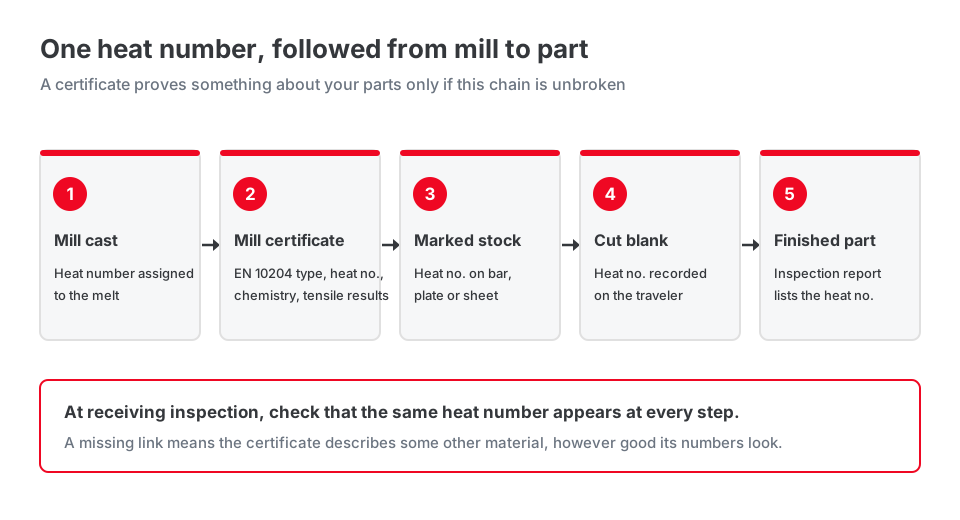
The heat number is the thread that ties the paper to the metal. Ask for it to appear on the supplier's traveler or inspection report for your parts, and on the bag or box label where practical. A certificate whose heat number does not appear anywhere in the supplier's own records for your order is a certificate for some other material.
3. Check every chemistry value against the standard's limits
Compare each element with the minimum and maximum in the standard named on the certificate, not with a generic datasheet. Pay most attention to the elements that define the grade. For austenitic stainless, that means chromium, nickel and, for 316-type grades, molybdenum. A value sitting exactly on a limit for several elements at once deserves a second look.
4. Check mechanical properties and the delivery condition
Confirm that tensile strength, proof or yield strength and elongation sit inside the standard's range for the stated condition and thickness. Then check that the condition itself is the one you need. An annealed bar and a cold-worked bar of the same grade machine differently and behave differently in service.
5. Check the document type and the signature
Make sure the document says which EN 10204 type it is, and that it matches what you ordered. A 2.2 test report sent where the RFQ asked for a 3.1 inspection certificate is a non-conformance, even if every number on it is good.
How Can You Verify an MTR From an Overseas Supplier?
Most certificates are genuine. The risks buyers worry about when sourcing abroad are more specific: a real certificate attached to different material, a stockholder's retyped document that drops the mill's identity, or a heat number that cannot be traced to the parts. Each one has a practical check.
- Ask who issued it. A stockholder certificate should still name the producing mill and carry the mill's heat number. If the mill cannot be named, treat the data as unverified.
- Ask for the mill's original alongside any retyped version. A scan of the original is enough. Differences between the two are a red flag.
- Check the heat number on the stock. On a first article or a factory visit, ask to see the bar or sheet marking for your job and compare it with the certificate.
- Check that the numbers are plausible. Identical chemistry across certificates for different heats, or values copied straight from a standard's typical figures, suggest the document was not produced from a test.
- Test a sample when the risk justifies it. Independent chemical analysis or positive material identification (PMI) on a sample part settles any doubt. ASTM E1476 is the standard guide for metals identification, grade verification and sorting, and lists the methods, including X-ray fluorescence and optical emission spectrometry.
None of these checks requires distrust of a particular supplier. They are the same receiving-inspection habits a buyer would apply to a domestic mill, adjusted for the fact that you may not see the material before it is machined.
What Should Your RFQ Say About Material Certificates?
Material standards put the responsibility on the purchaser to say what is wanted. EN 10130, the European standard for cold-rolled low-carbon steel flat products, puts the purchaser in charge of stating, at enquiry and order, whether inspection documents are required and which type. If the RFQ is silent, you have no basis to reject a lesser document later.
Put these lines in the RFQ or on the drawing's notes block:
- The material standard and grade, written exactly as you want it to appear on the certificate.
- The certificate type required, for example "EN 10204 3.1 inspection certificate."
- That the heat number must be recorded on the inspection report or traveler for the parts.
- Whether you need the mill's original document or accept a stockholder's certificate that names the mill.
- When the certificate must arrive: with the shipment, or before shipment for review.
Our guide to submitting a CNC machining RFQ to China covers the rest of the RFQ package. Material certification belongs in the same first message as the drawing and quantity, because it can affect which stock a supplier quotes.
When Do You Actually Need a 3.1 Certificate?
Not every part needs one. A cosmetic cover in 6061 aluminum and a pressure-bearing stainless fitting carry very different consequences if the material is wrong. A sensible rule is to tie the document type to the consequence of a material error.
- Load-bearing, pressure-retaining or corrosion-critical parts: ask for 3.1 and keep it in the part's quality record.
- Automotive parts under a customer's quality program: follow the customer's material certification requirement, and make sure it asks for heat traceability through to the part.
- Medical-adjacent parts such as instrument components or housings: follow the device maker's own specification, which normally calls for certified material and recorded traceability.
- Prototypes, fixtures and non-critical brackets: a 2.2 test report or a supplier CoC is often enough, and it can shorten lead time if certified stock is not on the shelf.
What This Means for Your Next Quote
An MTR protects you only when three things line up: the document type you asked for, the heat number traced to your parts, and values that fall inside the standard named on the paper. Specify all three before the order, and the certificate becomes a quick receiving check instead of a dispute. When you send a drawing, state the certificate type you need next to the material callout, and ask us to confirm before the order what documentation will come with the stock we quote. Request a quote with your drawing and material requirements.