The quality of a CNC machining quote is a direct function of the quality of the RFQ that produced it. A vague RFQ gets a vague quote — padded with assumptions, likely to change once the drawing is actually reviewed in detail, and slower to turn around because someone has to go back and ask the questions that should have been answered upfront. A tight, drawing-led RFQ gets a quote that holds up, on the first pass, without a round-trip.
This is the checklist we actually use to sort quote-ready RFQs from ones that need a clarifying question first.
1. A Real Drawing, Not Just a 3D Model
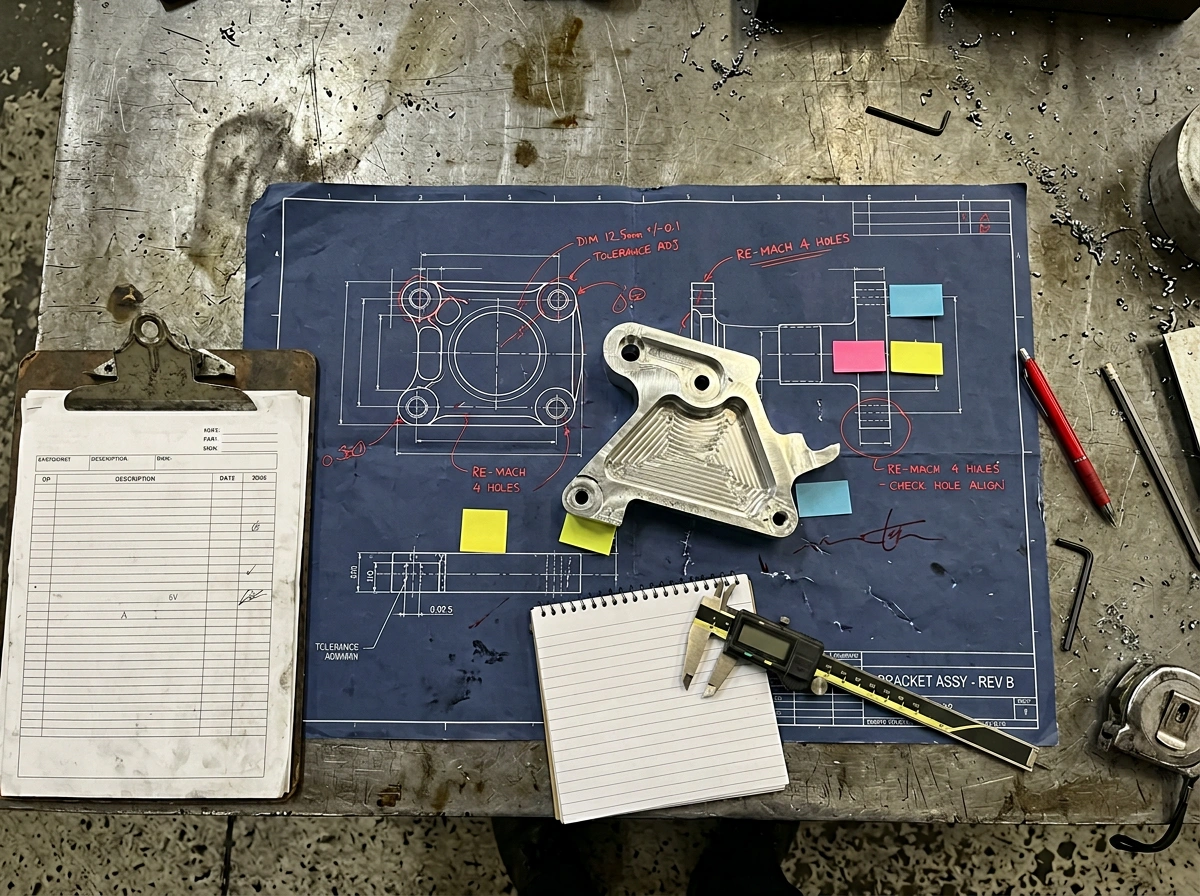
A 3D model (STEP, IGES, or native CAD) tells us geometry. It does not tell us tolerance, surface finish requirements, thread specs, or which features are critical. For an accurate quote, we need a 2D drawing with:
- Dimensions and tolerances, with GD&T callouts where they apply — see our GD&T basics guide if you're not sure which features need them
- Material callout, including grade and temper/condition where applicable
- Surface finish requirements
- Thread specifications (size, class, depth)
- Critical-to-function features flagged explicitly
A model alone gets you a rough budgetary number. A drawing gets you a real quote.
2. Material Specified to Grade, Not Just Family
"Aluminum" is not a material spec — 6061-T6, 7075-T651, and 5052-H32 machine differently, cost differently, and perform differently in service. The same is true across every material family: stainless steel (304 vs 316 vs 17-4PH), plastics (cast vs extruded acrylic, various nylon grades), and titanium alloys all have meaningfully different cost and lead time depending on the specific grade. If your drawing just says "steel" or "plastic," expect a clarifying question before a firm quote — or specify the grade upfront and skip that round-trip entirely.
3. Tolerances That Match What the Part Actually Needs
Tighter tolerances cost more — not because shops are padding margin, but because tighter tolerances mean slower cycle times, more inspection, and sometimes a different machine or process entirely. A drawing with ±0.01 mm called out on every dimension, including features where it doesn't matter, will quote high because every one of those tolerances has to be honored and inspected. Reserve tight tolerances for the features that actually require them — mating surfaces, press fits, sealing faces — and let non-critical dimensions carry a standard shop tolerance. This is one of the single biggest levers on final part cost, and it's entirely in your control before the RFQ goes out.
4. Surface Finish and Cosmetic Requirements Stated Explicitly
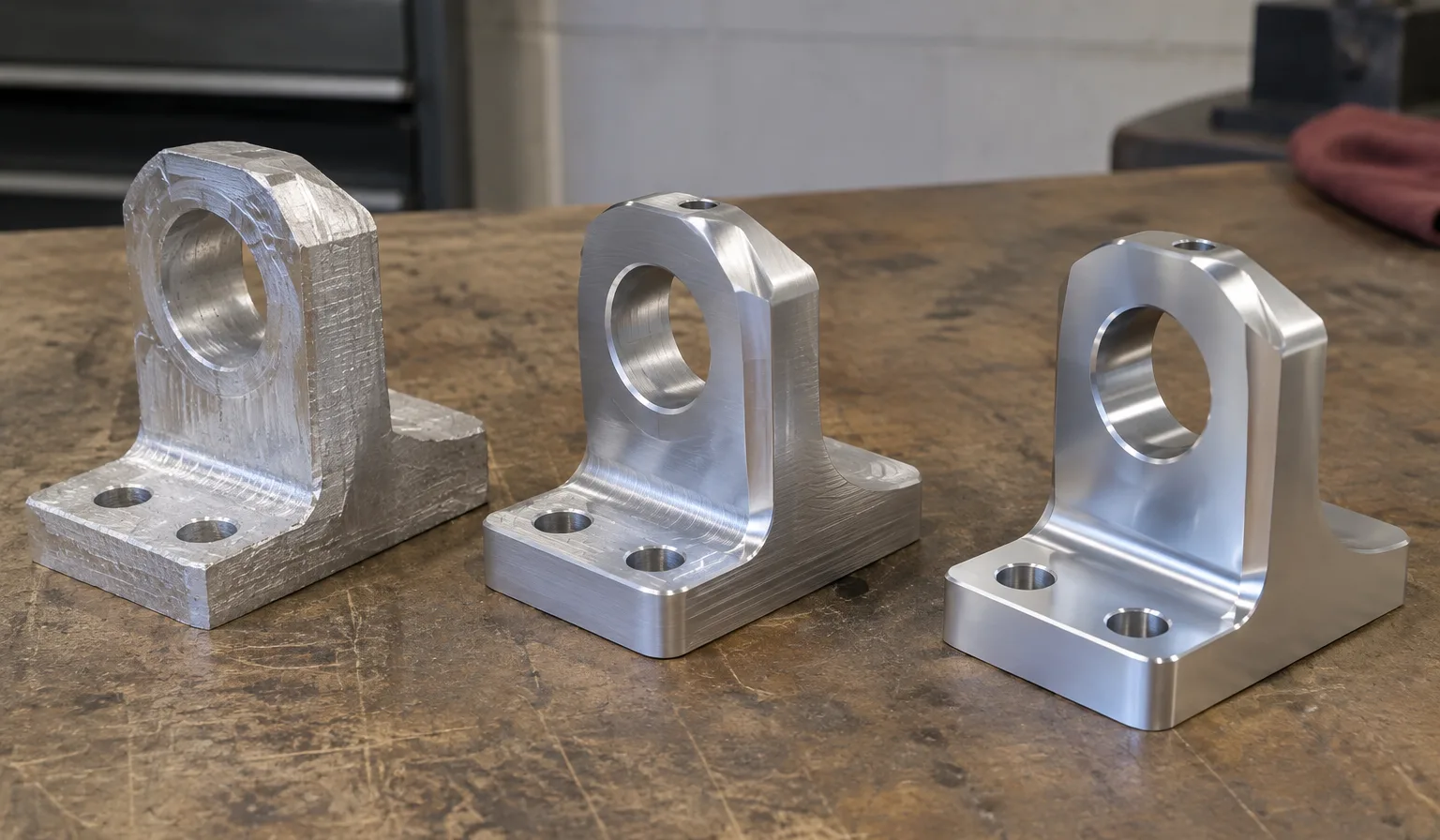
"As machined" is a valid spec, but it needs to be stated — otherwise a quote may include an assumption (an anodizing step, a bead blast, a polish) that either isn't needed or isn't what you had in mind. If a part has a cosmetic surface, customer-facing or visible in an assembly, versus a purely functional one that's hidden or mating only, call that distinction out. It changes which surfaces get finish treatment and which don't, and it directly affects cost.
5. Quantity — Including Where It's Headed
Quote pricing is quantity-dependent by nature — setup and programming cost amortizes differently at 5 units versus 500. Beyond the immediate order quantity, telling us where the program is headed — a one-off prototype, a bridge run before tooling, or an established production quantity — changes which process and which quote structure actually makes sense. A part quoted purely as a one-off prototype may use a different machining strategy than the same part quoted with an eye toward a production ramp.
6. Certifications and Traceability Requirements, Upfront
If the part is going into an aerospace or medical device program, say so at the RFQ stage — not after the quote comes back. AS9100 and ISO 13485 programs carry material traceability, inspection documentation, and process control requirements that materially affect both cost and lead time, and they need to be built into the quote from the start rather than added after the fact.
7. Lead Time Expectations, If You Have Them
If there's a hard delivery date driving the order, say so. Expedited lead times are usually accommodable but change the quote — knowing upfront whether speed or cost is the priority lets the quote reflect the actual trade-off you're making, rather than a default assumption in either direction.
The Drawing-Led RFQ Checklist
- 2D drawing with dimensions, tolerances, and GD&T callouts on critical features
- Material specified to exact grade and condition
- Tolerances reserved for features that actually require them
- Surface finish and cosmetic requirements stated explicitly
- Quantity, plus where the program is headed — prototype, bridge, or production
- Certification requirements (AS9100, ISO 13485, or none) stated upfront
- Lead time expectations, if there's a hard deadline
An RFQ built against this checklist lets us quote against your exact callouts rather than an assumption — the difference between a quote that holds and one that changes once engineering actually reviews the drawing.
What Happens After You Submit
If something is missing or ambiguous, we'll flag it and ask before quoting, rather than guessing and hoping it matches your intent. Explore our CNC machining capabilities, or contact us directly with your drawing.