Two quotes for what looks like the same bracket can come back 40% apart, and the reason is almost never that one shop is padding the number. It's that a flat-pattern drawing leaves five cost drivers undefined, and each shop fills the gaps with its own assumptions. Here is what those drivers are and how each moves the price on a China-sourced quote.
What Actually Makes Up a Sheet Metal Fabrication Cost?
Every sheet metal quote decomposes into the same five buckets, whatever the shop or the country:
- Material and waste — the sheet consumed, including the offcut your part shape forces
- Cutting and setup — producing the flat blank, plus the one-time setup that run absorbs
- Forming — press-brake work, priced per bend rather than per part
- Tooling and amortization — fixed cost spread across the units you order
- Finishing — deburring, coating, plating or passivation, plus masking
When two quotes diverge, one of those five is where it happened.
Material and Waste — Where Nesting Efficiency Hides Cost
This is the biggest lever a buyer controls before the RFQ goes out, and almost nobody uses it.
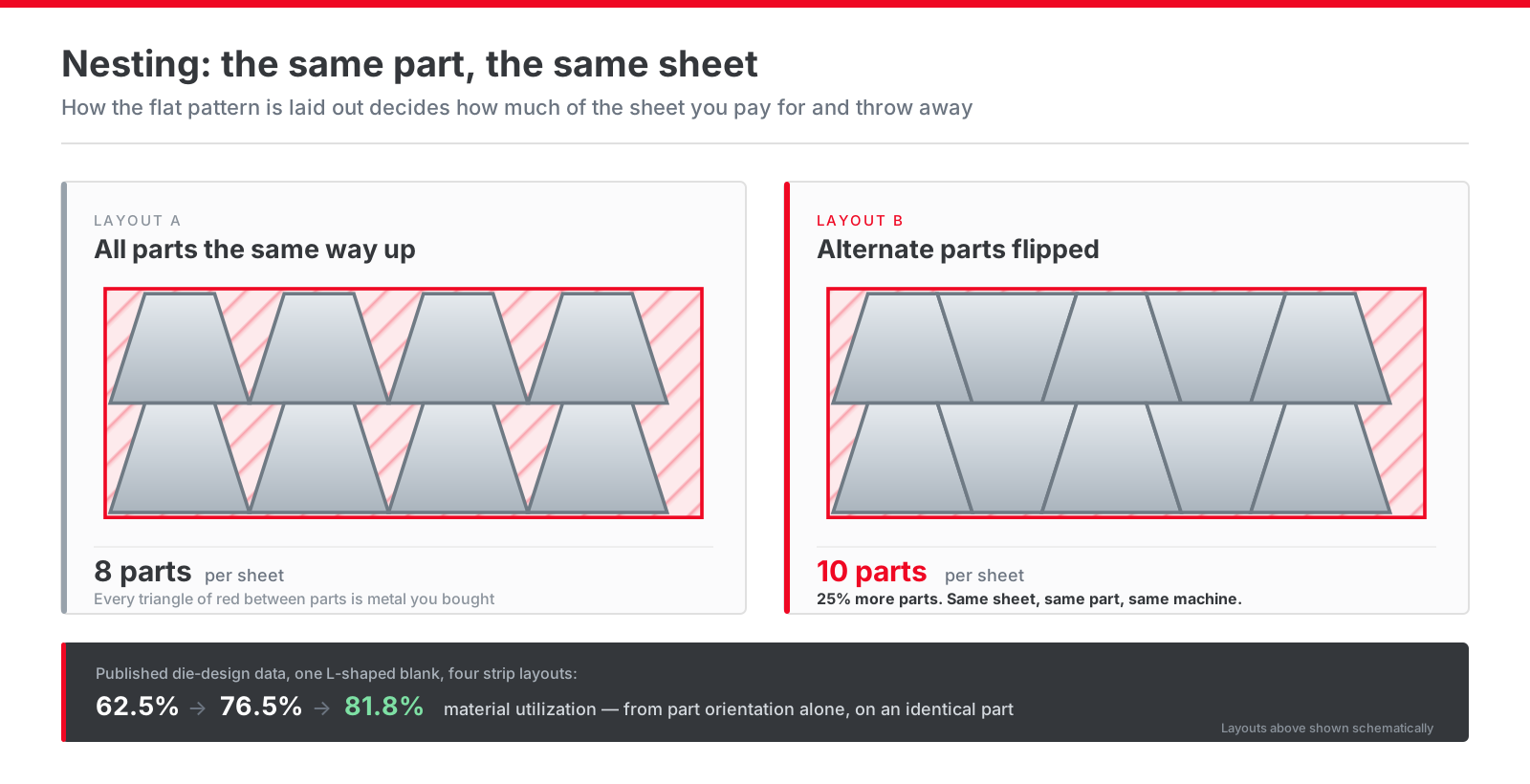
Your part never consumes only its own area. It consumes the sheet needed to cut it, and whatever falls between adjacent parts is scrap. Published die-design data on a single L-shaped blank shows the same part yielding 62.5%, 76.5% or 81.8% material utilization depending purely on how it's oriented and interlocked on the strip — nineteen points of yield from layout alone, on an identical part.
The benchmark in that literature is to use at least 70–80% of the sheet, so 20–30% scrap is normal rather than a red flag; Boothroyd and Dewhurst's own worked example lands at 20.6%. If a quote implies materially worse, the part outline is fighting the nest.
Gauge and grade then move price independently of area — a 304 stainless part is not a mild steel part with a different word on the drawing.
Cutting Method and Setup Cost
Laser, punch and waterjet carry different setup and per-part economics, and the choice interacts with quantity more than with part complexity — see our guide to cutting methods for stainless and other metals.
The mechanic to understand is amortization. Setup is a fixed cost per run: on a 5-piece prototype it lands almost entirely in the unit price, on a 500-piece run it disappears. That is why a prototype quote reads as expensive — it is a fixed cost divided by a very small number.
Forming — Why Bend Count Matters More Than Part Size
Bends are priced discretely, not as a percentage of the part.
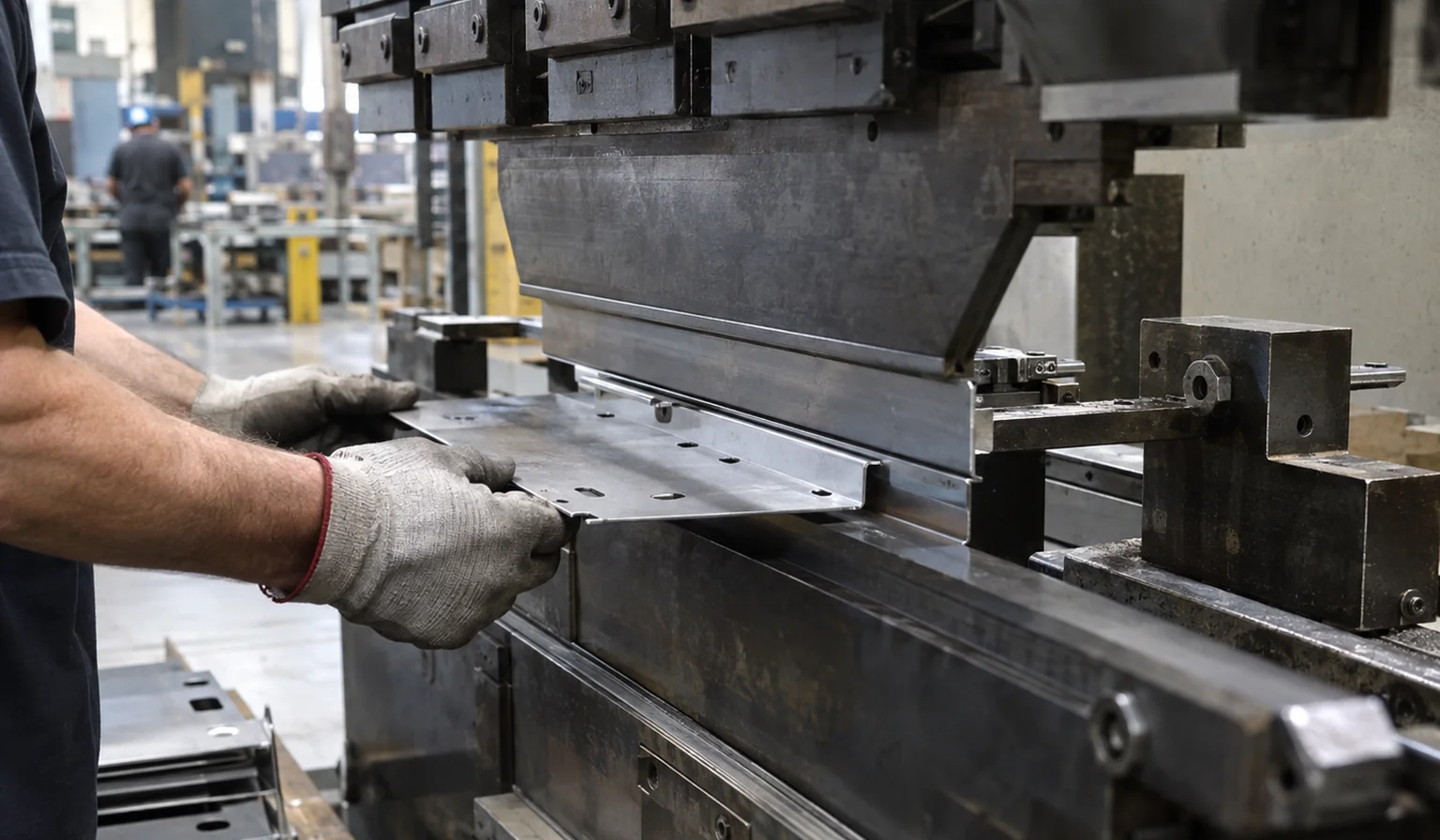
Each bend needs its own press-brake setup pass, tooling selection and inspection. A bracket with eight bends costs meaningfully more to form than one with two, even from identical blanks. Tolerance compounds it — a bend called to ±0.5° is a different operation from one inheriting the general tolerance block.
If the part is welded, weld symbols add labor proportional to joint length and weld type. A weld symbol with no type or length specified is one a shop must price defensively.
Tooling and Amortization
Tooling behaves differently from every other line item: it is a fixed number that does not scale with quantity. Published producibility cost tables make this visible — hold the design constant, step the order from 400 to 2,000 to 4,000 units, and material and direct labor rise proportionally while tooling cost sits flat.
That is the whole mechanism behind "per-unit price drops at volume": nothing gets cheaper to make, a fixed number is divided by a larger one. It also explains why a per-unit price without a stated quantity is meaningless.
Finishing — The Line Item Buyers Most Often Underspecify
Powder coating, plating, passivation and deburring are separate operations with their own lead times, and drawings are most often silent here. Our surface finish types guide covers which finish applies to which material.
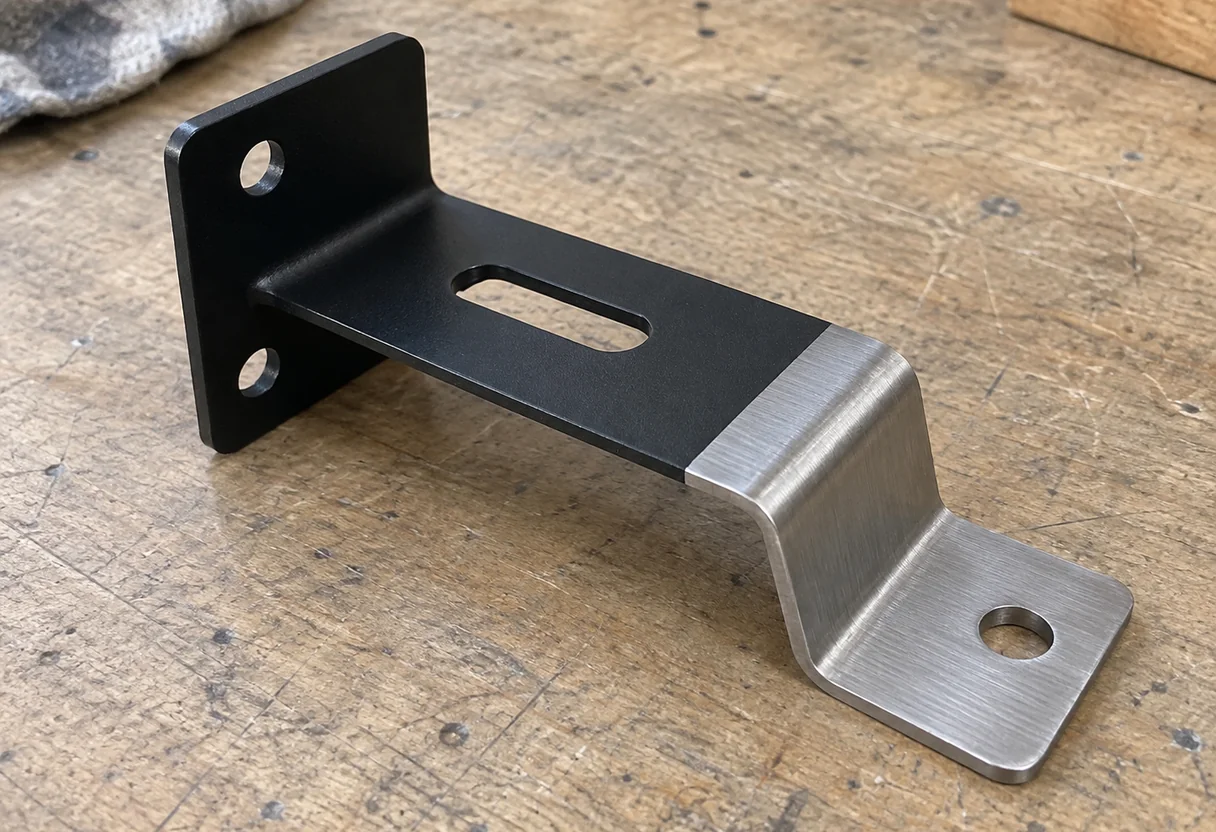
What buyers rarely anticipate is masking. Finishing a whole part is one price. Keeping a mating surface, threaded hole or ground point bare means masking those features by hand before coating and stripping the masking after — a distinct labor line that scales with the number of masked features, not part size.
What Drives Sheet Metal Cost in 2026 Specifically
Three things separate a 2026 quote from the same part a few years ago.
Landed cost, not unit cost. Import duties and Section 301 tariffs are a real component of what a US buyer pays on a China-sourced part. Rates change with little notice, so treat any percentage you read — here or anywhere — as needing confirmation against current USTR and CBP schedules when you order. Compare landed cost against landed cost, never ex-works against delivered.
Material volatility. Steel and aluminum prices have moved enough that quote validity windows have shortened — thirty days open is now a commercial decision, not a formality.
Where the labor differential applies. Largest on labor-intensive operations — welding, hand deburring, masking, assembly — and smallest on automated cutting, where the machine sets the pace regardless of who owns it.
Labor Rates for Precision Sheet Metal Fabrication
There isn't one labor rate. A shop carries several, and which one your part draws is set by the operation.
Punching and shearing sit at the low end, largely machine-paced. Precision forming to tight angular tolerance sits higher. Certified welding higher again, because the rate carries certification, qualification records and inspection with it. Assembly and hand finishing sit at the top, being least automatable.
This is why "what's your hourly rate" is the wrong question. The useful one is which operations your part requires — answered by the drawing, not the shop.
The Cost Breakdown, Line by Line
| Cost driver | What moves the price | Typical impact (2026, directional) |
|---|---|---|
| Material + waste | Gauge, grade, nesting efficiency | 20–30% scrap is normal; poor layout pushes it well past that |
| Cutting + setup | Method, run quantity | Setup amortizes almost fully into unit price under ~50 units |
| Forming (bends) | Bend count, angular tolerance | Each bend is a discrete setup and inspection cost |
| Welding (if any) | Symbol type, joint length, certification | Certified welding carries a materially higher rate than punching |
| Tooling | Order quantity vs. prototype run | Fixed — flat across volume, so prototypes absorb 100% per unit |
| Finishing | Finish type, number of masked features | Masked finishing is a separate line item beyond blanket finishing |
What This Means for Your Next Quote
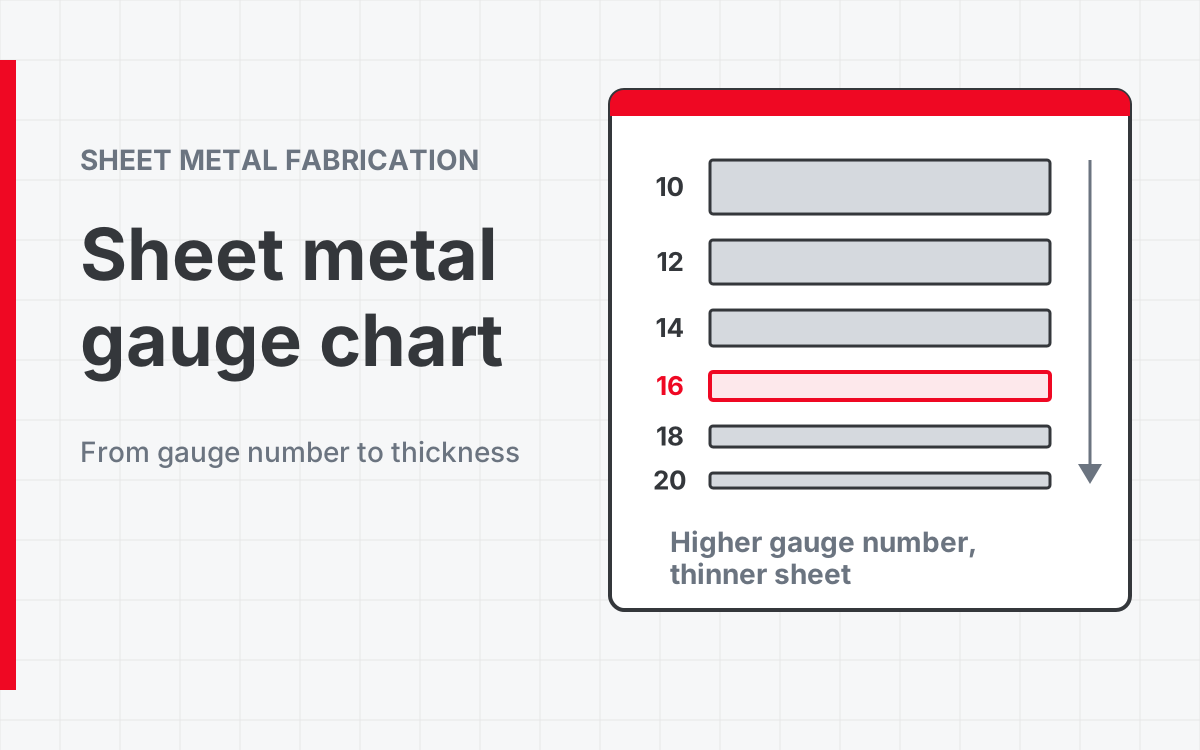
Four specifications close most of the gap between a quote that holds and one revised after engineering review: gauge and grade, bend count with the tolerance on each, weld symbols with type and length, and finish with masked areas identified. Add the quantity so tooling amortizes against a real number. If your drawings still call thickness by gauge, our sheet metal gauge chart gives the mm equivalent for steel, galvanized, stainless and aluminum.
Send those and what comes back is a price. Leave them implicit and it's an estimate with contingency built in. Get your sheet metal RFQ quoted — our sheet metal fabrication page covers what we run in-house, or contact us with your flat pattern.